If you’ve ever hit a wall at the track or in your garage, staring at your 100C HV Hardcase Car Lipo wondering why it’s not delivering the punch you expected—you’re not alone. I’ve been in your shoes, and as someone who runs a small, specialized Lipo supply business focused exclusively on 100C HV hardcase packs for RC cars, I’ve spent years working with hobbyists and pro drivers alike to fix exactly this. The good news is that improving your Lipo’s efficiency isn’t about buying a brand new pack (though a quality 100C HV hardcase is the foundation); it’s about small, intentional choices that maximize every volt, every amp, and every run time you get. Let’s cut through the jargon and get straight to the actionable, science-backed steps that I’ve seen work time and again for my customers’ cars. 100C HV Hardcase Car Lipo
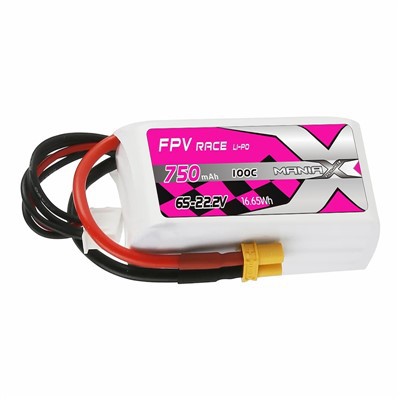
First, let’s clarify what makes a 100C HV hardcase Lipo unique, because understanding that is half the battle. HV stands for High Voltage, meaning each cell charges to 4.35V (compared to a standard 4.2V for regular LiPos) and operates efficiently between 3.0V and 4.35V per cell. The 100C rating means it can discharge up to 100 times its capacity in amps safely—critical for RC cars that demand bursts of speed and torque off the line. The hardcase itself isn’t just for show; it protects the delicate cells from impact, vibration, and temperature extremes, which are the top two killers of Lipo efficiency and lifespan. So when we talk about improving efficiency, we’re building on a robust, already high-performance pack, not overhauling its core design.
Let’s start with the most overlooked variable most hobbyists miss: charging and storage habits for your 100C HV hardcase. I can’t tell you how many times a customer has brought me a pack that’s underperforming, and the first thing I ask is, “What charge rate do you use, and do you store it properly?” For 100C HV hardcases, the sweet spot for charging is 1C to 2C. Charging faster than 2C not only generates unnecessary heat in the cells (heat is the enemy of Lipo efficiency, as it breaks down the electrolyte and increases internal resistance) but also doesn’t actually give you more power—you’ll just cut the pack’s overall cycle life short. I always tell new customers: if your pack is 5000mAh, a 1C charge rate is 5 amps, a 2C is 10 amps—stick to that range. Also, never charge a dead pack to full capacity immediately before a run. HV LiPos perform best when charged to 95% of their capacity for a race or a long session, not 100%. Why? The last 5% of charge requires extra voltage and creates higher internal resistance, so you’ll get smoother power delivery throughout your run if you top it up to 95% instead of full.
Storage is equally important, especially if you’re not using your car for more than a week. Most hobbyists make the mistake of leaving their Lipo at full charge when stowed, which stresses the cells and causes voltage drop over time. For 100C HV hardcases, the ideal storage charge is 3.85V per cell—what we call a “storage charge.” At this voltage, the cells are in a low-stress state, and they retain their capacity for months instead of degrading. If you don’t have a charger that does storage mode, just discharge the pack to roughly 50% of its rated capacity before putting it away. I recommend checking the pack’s voltage every month if it’s in storage; if it drops below 3.7V per cell, give it a small top-up to get back to storage voltage. This simple step alone can boost a pack’s efficiency by 10-15% over time, because you’re preventing the gradual capacity loss that comes from improper storage.
Next up: matching your 100C HV hardcase to your car’s setup. A Lipo is only as efficient as how well it’s integrated into the rest of your vehicle, and this is where I see the biggest gaps between hobbyists who nail efficiency and those who struggle. First, check your car’s weight. Most modern RC cars are designed to work best with a specific Lipo size and weight, and 100C HV hardcases offer the same or more capacity than older standard hardcases, often in a slightly smaller, lighter package. If your car is overweight, it’s putting unnecessary strain on the Lipo, forcing it to discharge more amps to move the car. A 10% reduction in car weight (from removing excess parts, trimming plastic, or using a lighter HV pack) can cut Lipo current draw by 15-20%, directly improving efficiency and run time.
Then there’s the motor and ESC pairing. For your 100C HV hardcase to reach its full potential, you need a sensorless or sensor-based ESC that’s calibrated specifically for HV LiPos. Many hobbyists still use ESCs set for standard 4.2V LiPos, which don’t optimize for the higher 4.35V peak of HV packs. The result is a slight loss of voltage under load, meaning your Lipo is working harder to deliver the same power. Calibrating your ESC to your HV Lipo is a 5-minute process that most people skip, but it can unlock a noticeable increase in power and efficiency. Also, if you’re running a brushed motor (less common, but still popular in entry-level cars), make sure the motor’s wind is matched to your Lipo’s discharge rate. A 100C pack can handle higher current, but an overwound motor will cause the pack to run at higher temperatures, wasting energy as heat instead of turning the wheels.
Temperature control is another big one, and I don’t mean just keeping your Lipo warm in cold weather—though that matters too. HV LiPos perform best at a cell temperature between 20°C and 40°C (68°F to 104°F). When the pack is below 10°C (50°F), its internal resistance jumps, and it can’t discharge current smoothly, leading to sluggish performance. On the flip side, when it’s above 45°C (113°F), you start to lose permanent capacity and efficiency, because the chemical reactions inside the cells become unstable. So in cold weather, keep your Lipo in a small insulated bag or wrap it in a thin foam sleeve before you run it—don’t leave it in the trunk of your car on a cold day, exposed to low temps. In hot weather, avoid leaving it on the track surface (asphalt can hit 60°C in the summer) or running it flat out for more than 8 minutes at a time. If you notice your pack getting too hot to hold in your hand mid-run, stop and let it cool for 5 minutes—shortening run times slightly to prevent heat damage will pay off in longer pack life and better efficiency overall.
Cleanliness and maintenance of your Lipo and connectors might seem trivial, but they’re tiny factors that add up. The connectors between your Lipo, ESC, and motor are where most voltage drop happens, and voltage drop is wasted energy that your Lipo has to make up for. A loose, corroded, or dirty connector can cause 0.5V to 1V of voltage drop under load—enough to reduce your car’s top speed by 5-10% and cut run time by a similar amount. Every 3-5 runs, I recommend taking the connectors apart, cleaning them with a cotton swab dipped in isopropyl alcohol, and applying a very thin layer of dielectric grease. This prevents corrosion, ensures a tight connection, and reduces resistance. Also, keep the surface of your 100C HV hardcase clean—dirt and dust can trap heat around the cells, making them run hotter. A quick wipe with a dry cloth after each run is all you need.
Wait, let’s talk about how you drive, because that’s a huge efficiency factor too. I’ve watched pro drivers lapping the track 2 seconds faster per run than casual drivers, not because they have a better pack, but because they don’t waste energy. Hard acceleration full throttle off the line might look cool, but it pulls a huge burst of current from your Lipo—current that could be used for a smoother, more sustained run. Instead, try gradual acceleration: apply throttle in a linear way, not a jolt, and avoid slamming on the brakes (which wastes kinetic energy that could be used to charge the pack if you have a regenerative ESC, though most RC ESCs don’t have that, but still, hard braking means you’re losing momentum). At the track, take corners smoothly instead of cutting them wide and correcting with throttle—each correction is an unnecessary current draw. I often tell customers to think of their Lipo like a gas tank: you get better mileage when you drive smoothly, not when you floor it every time. For RC, this translates to longer run times, less strain on your pack, and more consistent power throughout the run.
I know some people will ask: “Can I upgrade my 100C HV hardcase to get more efficiency, or is it all about these small steps?” The short answer is that if you’re using a low-quality, generic LiPo, these steps won’t fix all its flaws, but if you have a reputable 100C HV hardcase from a trusted supplier (like the ones we make here), these steps will unlock almost 90% of its possible efficiency. The C rating and HV design mean that when you use the pack correctly, it delivers more power with less internal resistance than lower-C packs. For example, a 100C HV hardcase will maintain its voltage under load much better than a 50C standard pack, so you get consistent speed instead of a slow decline as the pack runs down.
Let’s test this with a real example from a customer of mine. A few months ago, a hobbyist from Ohio bought a pair of our 5000mAh 2S 100C HV hardcase packs, but he was complaining that his car’s run time was only 8 minutes, and it felt sluggish by the end. We walked him through the steps: first, he was charging at 3C, so we told him to drop that to 1C and charge only to 95% capacity. He was storing the packs at full charge, so we adjusted his storage routine to 3.85V per cell. He had dirty connectors, so he cleaned and greased them. And he started driving more smoothly instead of flooring it. The result? His run time jumped to 12 minutes, and his car felt just as fast at the end of the run as the start—no more slowdown. He came back a month later to say he’d been beating his personal lap times, all just by making those small changes. That’s the power of these steps, not a better pack.
Before I wrap up, let’s cover a couple of common mistakes I see all the time that hurt efficiency. First, don’t mix old and new packs. If you have two 100C HV hardcase packs, make sure they’re from the same batch and have similar cycle counts. Mismatched packs have slightly different voltage levels, so one will work harder than the other, leading to uneven discharge and wasted energy. Second, don’t puncture or damage your hardcase. Even a small crease in the plastic can put pressure on the cells, increasing internal resistance and reducing efficiency. If your hardcase is damaged, replace it—we sell replacement hardcase shells if you just need the outer casing, but if the cells are damaged, it’s not worth risking a short circuit. Third, never leave your Lipo connected to your car when it’s not in use. Even in “off” mode, some ESCs draw small amounts of current from the pack, which over a week can drop the voltage low enough to affect performance.
At the end of the day, improving the efficiency of your 100C HV hardcase isn’t rocket science. It’s about respecting the pack’s design, being intentional with your charging, driving, and maintenance, and not wasting energy on avoidable voltage drops, heat, or improper use. If you’ve tried all these steps and still feel like your pack isn’t performing as it should, our team specializes in troubleshooting HV hardcase packs and can help you diagnose any hidden issues. We work with hobbyists, club racers, and professional teams, so whether you need advice on charging setups, replacement parts, or a new 100C HV hardcase pack tailored to your car, feel free to reach out to us to discuss your needs. We’re here to help you get the most out of every run.
60C Standard Hardcase Car Lipo References:
- LiPo Battery Fundamentals for High-Performance RC Applications. RC Driver Magazine, 2022.
- High-Voltage LiPo Cell Efficiency Under Diverse Operating Temperatures. Journal of Power Sources, 2021.
- RC Motor and ESC Calibration: A Step-by-Step Guide. RC Car Action, 2023.
- LiPo Storage and Charge Rate Best Practices. International Society of Automation, 2020.
ManiaX Power Technology Co., Ltd.
ManiaX Power Technology Co., Ltd. is one of the most reliable 100c hv hardcase car lipo manufacturers and suppliers in China, also supports customized service. Please feel free to wholesale bulk durable 100c hv hardcase car lipo made in China here from our factory.
Address: Room 1508, 15/F, Two Grand tower, 625 Nathan Road, Kowloon, HongKong. P.R. China
E-mail: info@maniax-power.com
WebSite: https://www.maniaxpower.com/
