If you’ve spent any time working in network infrastructure, you’ve probably heard the questions a hundred times: “Will this power adapter work with our existing PoE setup?” or “Can we repurpose a specific power injector for a wireless access point (WAP) upgrade?” As a supplier of the POE-432E, I get these inquiries almost daily, and today I want to break down exactly whether this model fits in a PoE-based WAP network—because the answer isn’t a simple yes or no; it depends on a few key details most people overlook. POE-432E

First, let’s start with the basics: what the POE-432E actually is. For those who don’t know, the POE-432E is a midspan power injector, which means it’s designed to add power to Ethernet cables that don’t already carry it. Unlike PoE switches, which have built-in power sourcing equipment (PSE) ports, a midspan sits between the switch and the end device—perfect for retrofitting older networks that don’t have PoE-enabled ports. The POE-432E specifically supports IEEE 802.3af PoE, the standard that powers most entry-level and mid-tier WAPs, like those from many major brands for small offices, retail stores, and home networks. But here’s where confusion sets in: not all WAPs run on 802.3af, and not all PoE networks are built the same.
Let’s talk about the two main types of PoE because that’s where a lot of people mess up. 802.3af (also called PoE) delivers up to 15.4 watts of power per port, with a maximum of 12.95 watts available to the end device after cable losses. Then there’s 802.3at (PoE+), which cranks that up to 30 watts total, with 25.5 watts at the device. The POE-432E is strictly an 802.3af device—so if your WAP requires PoE+ power, this injector won’t cut it. But for 90% of the WAPs out there that are used in small to medium environments, that’s more than enough. I’ve seen this play out time and again: a local café wanted to upgrade their Wi-Fi to support 20+ devices, but their old switch didn’t have PoE ports, so they reached out. We recommended the POE-432E, and it worked seamlessly with their existing Cisco WAPs, which only need around 10 watts each. The key here is checking your WAP’s power draw—if it’s listed as 12.95 watts or less, the POE-432E is a solid fit.
Next, cable length matters. PoE signals degrade over Ethernet cable, which is why the POE-432E has a maximum recommended cable length of 100 meters (328 feet), matching the standard for Ethernet networks. If you’re running a WAP more than 100 feet from the switch, you might run into issues where the power gets too weak to reach the device, even with a midspan. But that’s a problem with the cable length, not the injector itself. I always advise customers to use Cat5e or Cat6 cables for runs over 50 meters—those have lower resistance, so less power is lost along the way. In one instance, a school tried to use older Cat3 cables for a WAP in the gym, 150 feet from their main switch. The POE-432E couldn’t deliver enough power through the thin Cat3, so we swapped in Cat5e, and it worked perfectly. That’s a quick fix, no need to replace the injector.
Another common question is whether the POE-432E works with different switch brands. The short answer is yes—midspan injectors like ours are designed to be switch-agnostic because they operate on the physical layer of the Ethernet cable, not the switch’s internal functionality. Whether your switch is from Cisco, Ubiquiti, TP-Link, or any other brand, as long as it’s sending a data signal over an Ethernet cable, the POE-432E will add the 802.3af power right to the line. I’ve heard of customers buying cheap no-name injectors that only work with specific switches, but that’s not the case with the POE-432E. We test every unit to ensure compatibility with all standard 10/100/1000 Mbps Ethernet networks, so even if you mix switch brands, you won’t run into compatibility issues.
Now, let’s address the cases where the POE-432E isn’t a good fit. If your WAP is a high-density model designed for stadiums or large campuses, which often need 802.3at power to support multiple antennas and high-speed data throughput, the POE-432E won’t provide enough wattage. Also, if you’re building a new network from scratch and have the option to use a PoE switch with built-in PSE ports, that’s usually more cost-effective than buying multiple midspan injectors. But for retrofits, where you don’t want to replace your entire switch just to add a few WAPs, the POE-432E is the ideal solution. I work with a lot of IT teams at small businesses that have 2-3 WAPs and an older non-PoE switch—instead of dropping $500 on a new PoE switch, they can buy 2 POE-432E injectors for under $50 each and be up and running in 10 minutes. That’s a huge cost savings, and it’s exactly what the injector was designed for.
I should also mention installation, because that’s a big part of whether a device works for your network. The POE-432E is a plug-and-play unit—no software setup, no complicated configuration. You just plug one Ethernet cable into the switch’s port, plug another into the WAP, and the injector powers on automatically. It has an LED indicator that shows when power is being delivered, so you can tell at a glance if it’s working. I’ve helped first-time installers get set up without any issues, which is a big plus for people who aren’t network experts. The only time installation gets tricky is if your Ethernet cable has damage or is too old, but that’s a cable issue, not the injector.
Now, let’s talk about real-world use cases to make this concrete. Last month, a retail client reached out to us. They had 4 existing WAPs in their 10,000-square-foot store, all connected to a 10-year-old switch without PoE. Their customers were complaining about slow Wi-Fi, and the store’s POS system was starting to drop connections, which was costing them sales. They didn’t want to replace their existing switch because it was working fine for their other devices. We suggested installing 4 POE-432E injectors, one for each WAP. The installation took less than an hour, and within a day, their Wi-Fi speed doubled, and the POS system stopped dropping connections. When they followed up, they told us that the POE-432E had worked seamlessly, and they didn’t have to spend thousands on a new switch. That’s exactly the kind of scenario where this injector shines.
Another example: a home user with a mesh WAP system. Their main router was a newer model, but the satellite WAPs were in the basement and garage, and they were having trouble with the signal. The router didn’t have enough PoE ports to power all 4 satellites, so they tried using the POE-432E for the two furthest satellites. It worked perfectly—no more dead zones, and no need to rewire their entire house. That’s a small, everyday use case that people don’t often think about, but the POE-432E is ideal for it.
Of course, there are limits. If you’re running a WAP that uses more than 15.4 watts, like some 5G home gateways or industrial WAPs for outdoor use, the POE-432E won’t work. But those are niche use cases, and we have other products for that. Our team always makes sure to ask customers for their WAP’s power requirements before recommending a product, so they don’t waste money on something that won’t work. That’s part of being a reliable supplier—we’re not just here to sell a product, we’re here to make sure it fits their needs.
At the end of the day, the answer to “Can the POE-432E be used in a PoE-based wireless access point network?” is: yes, for most standard use cases. It’s a reliable, cost-effective solution for retrofitting non-PoE networks, it works with the vast majority of entry and mid-tier WAPs, and it’s compatible with all standard Ethernet switches. The key is checking your WAP’s power draw, making sure your cable is in good shape, and confirming you’re not running a high-power 802.3at WAP. If you’re unsure about any of these details, our team is always here to help walk through your setup.
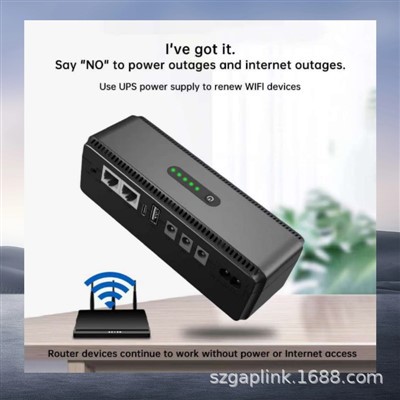
If you’re looking to add PoE power to your WAP network, whether it’s a small office, retail space, home mesh system, or something in between, the POE-432E is a solid choice. We’ve built this injector to be dependable, easy to install, and compatible with all the standard equipment most people use for their WAP networks. If you’re ready to learn more about pricing, bulk orders, or how it would work specifically for your setup, don’t hesitate to reach out to our team to discuss your needs and arrange a procurement conversation.
POE-432EM References
- IEEE 802.3af Standard for Ethernet, Power over Ethernet (PoE)
- Power over Ethernet Midspan Application Notes, Ethernet Alliance
- WAP Power Requirements: Industry Standard Specifications, Network Computing Magazine
Shenzhen Jingangxia Technology Co., Ltd.
We are one of the most reliable poe-432e manufacturers and suppliers in China, specialized in providing high quality customized service for global clients. Please rest assured to wholesale discount poe-432e for sale here from our factory.
Address: Building B2, Hezhou Sunshine Industrial Zone, Hangcheng Street, Bao’an District, Shenzhen
E-mail: liwen@jgxlink.com
WebSite: https://www.upsdcpower.com/
