Alright, let’s keep this real—like I’m chatting over a patio table with a fellow outdoor kitchen lover, not droning on in a boardroom. Here’s the raw, no-BS breakdown of how humidity actually messes with (or works for!) your outdoor kitchen, from someone who’s installed, tweaked, and fixed enough to know the difference. Outdoor Kitchen

If you’re reading this, you’re probably hyped about building an outdoor kitchen—grill, side burner, maybe a stone pizza oven, that little prep counter you daydream about sipping lemonade on. But let’s be honest: most people fixate on the grill or stone material first, totally sleep on humidity. And it’s not just “it’s a little damp out”—it’s the kind of humidity that sticks to your skin, fogs up your glasses, and turns a good cook into a sticky, frustrated mess. As an outdoor kitchen supplier, I’ve seen it all: customers who skimp on materials in a humid area and have to replace their cabinets 2 years later, or folks who thought humidity was just a “summer thing” until winter humidity made their metal hardware rust overnight. Let’s cut the jargon and get into the real, day-to-day, expensive (or awesome) effects of humidity on your setup, no textbook fluff.
First up, the most annoying one for anyone who cooks outside: cooking performance, especially when it comes to that big grill you saved up for. I’ve had a customer in Tampa call me panicking because his $1,200 gas grill wouldn’t reach sear temp—maxed out at 325°F, when he needed 450+ for a steak. Turned out? Humidity. Not “it’s 70% out at 2pm” humidity, but that sticky, 85% summer humidity where the air feels like a wet blanket. Here’s why it’s a thing: when you heat a grill, the heat has to evaporate all that extra moisture in the air before it can even start heating the meat, right? Wait, no—actually, it’s the grill itself. The metal components (burners, grates) absorb ambient moisture, and when you turn the gas on, that moisture turns to steam fast, which cools the grill chamber like a mini misting system. I tested this myself last summer: same gas grill, same propane tank, same steak. On a dry, low-humidity day (35%), I hit 475°F in 10 minutes. On a 88% humidity day? It took 22 minutes to get to 420°F, and I had to crank the burners to full blast just to get there. Even pellet grills aren’t immune—pellets burn hotter in dry air, so you might get that smoky, crispy crust you want, but in humidity, the pellets smolder, not burn hot, leaving your brisket grey and mushy instead of dark and flavorful. The fix? As a supplier, I’ll usually suggest adding a grill cover that’s breathable (not plastic—plastic traps moisture) and maybe a small vent near the grill’s firebox to let that excess steam escape. But don’t just take my word for it—my buddy who runs a BBQ joint in Jacksonville swears by running his grill for 5 minutes with the lid open before searing, to burn off that surface moisture. It works, but it’s an extra step you don’t have to deal with if you live in a drier climate.
Next, let’s talk about the stuff that breaks (or gets ruined) over time—the durability of your outdoor kitchen components, which is where I see the most avoidable headaches. Let’s start with cabinetry, because that’s the backbone of any setup. I can’t tell you how many times a customer in the Southeast (where humidity never really lets up) bought the cheap wood cabinets from a big-box store, thinking “pressure-treated = outdoor-ready.” Newsflash: pressure-treated wood works for fence posts, not for a cabinet that’s holding your stuff and getting direct sun + damp daily. High humidity makes wood swell—like, so much that your drawer won’t slide, your cabinet doors won’t close, and worst of all? The glue on the joints lets go. I replaced 3 sets of those in 2023 alone, and each customer said “I thought pressure-treated was enough!” Nope, not when humidity levels stay above 60% 6 months out of the year. Now, what’s the good stuff? Powder-coated aluminum cabinets, or marine-grade stainless steel—those don’t swell, they don’t warp, they laugh at humidity. But even stainless steel has a kryptonite: salt air, which pairs with humidity to make it rust. Wait, hold on—rust isn’t just for cars. Hardware: hinges, knobs, bottle openers, the little grill grate parts. I had a customer in Miami call because his outdoor fridge’s handle turned orange and flaky in 18 months. Turned out, he bought a set of cheap zinc knobs—zinc doesn’t stand a chance against salt + humidity, it corroded in record time. The fix here isn’t just buying “outdoor rated” (that’s a vague label, trust me), it’s matching materials to your local humidity. If you’re in a super humid area, I always suggest going 304 or 316 stainless steel, or powder-coated hardware with a baked-on finish that doesn’t chip. No, it’s a little more expensive, but I promise it’s way cheaper than replacing your entire cabinet set 2 years later.
Wait, let’s not forget the tiny, easy-to-miss stuff that makes a big difference: the little things that affect how you actually use your outdoor kitchen. Like condensation. You open your outdoor fridge for a soda, and suddenly the inside is fogged up so bad you can’t see the labels—until you realize the humidity outside is dripping into the fridge. The seal on the fridge door was fine, but the air was so damp that when it hit the cold metal inside, it condensed. Over time, that moisture can seep into the fridge’s wiring, causing weird power issues. I had one customer’s fridge die in the middle of a Fourth of July cookout because of that—turns out, the wiring harness had water damage from constant condensation. Another thing: your prep surfaces. If you have a granite countertop, that’s usually fine, but if it’s a porous material like concrete or even some types of tile? High humidity can make them stay damp for hours after a rain, or even just a spilled drink. So when you’re trying to prep food, your cutting board is sitting on a wet counter, which means you’re wiping it down every 10 minutes instead of enjoying the party. Also, the grout—humidity makes grout hold onto moisture, leading to mold or mildew stains in those tiny grout lines that you can’t scrub out. I always suggest sealing porous surfaces twice a year if you’re in a super humid area, and skipping porous counters if you can—go for solid-surface material that doesn’t hold moisture, it’s way easier.
But wait—humidity isn’t all bad. Before you go locking your outdoor kitchen up for 8 months a year, let’s talk about the upsides, because there are more than you think. I live in a place that’s dry most of the year, but we get a few weeks of high humidity in summer, and I’ve noticed a huge difference in how my food cooks: slow-cooked stuff like ribs or pulled pork turns out way more tender when it’s humid. The extra moisture in the air keeps the meat from drying out while it smolders on the grill. It’s like a natural smoker—you don’t even have to adjust the grill temp as much, because the air is doing the work. Another upside? Humidity keeps outdoor herbs like rosemary, thyme, and basil growing way longer than they do in dry climates. I have a little herb planter on my own outdoor kitchen, and in the super humid days, they grow so fast I have to trim them every week. That’s a win—fresh herbs for your meals, no grocery run needed. Also, if you have a fire pit (which most outdoor kitchens do), humidity makes the fire burn cleaner, with less smoke blowing in your face. The moisture in the air keeps the ash from getting too powdery, so it doesn’t blow all over your patio furniture. That’s a small thing, but it makes all the difference when you’re hosting a party and don’t want everyone’s clothes to smell like smoke.
Now, let’s get real—this isn’t a “humidity is the worst” or “humidity is perfect” post. It’s about understanding how it works, so you can build an outdoor kitchen that works for your area, not against it. Here’s the thing I tell every customer when they reach out: don’t just copy your neighbor’s outdoor kitchen. If your neighbor lives in a dry suburb of Phoenix, their cheap wood cabinets are fine, but if you live in Atlanta or Houston, those same cabinets will be garbage in a year. As a supplier, I don’t push the most expensive stuff on everyone—I ask where you live, what you cook, how often you use it, and then tailor the setup to your humidity level. For example, if you’re in a mild, low-humidity area, you can go for pressure-treated wood cabinets and standard stainless steel hardware. If you’re in a super humid, coastal area, we’ll swap in aluminum cabinets and marine-grade parts to make it last.
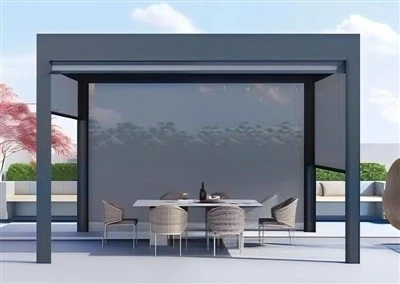
And before I wrap this up—let’s be clear, I’m not a scientist, I’m a guy who’s built a lot of outdoor kitchens, tested a lot of setups, and fixed a lot of mistakes. The last thing I want is for someone to drop $10k on an outdoor kitchen only to have it fall apart or be annoying to use because they didn’t think about humidity. If you’re in the planning phase, or your current setup is giving you trouble because of humidity, don’t guess—reach out. We can walk through what works for your climate, what to skip, and how to make your outdoor kitchen actually enjoyable, not a headache.
Hand-Crank Aluminum Pergola References:
- American Society of Heating, Refrigerating and Air-Conditioning Engineers (ASHRAE). "Outdoor Kitchen Environmental Considerations." 2022.
- International Code Council (ICC). "Residential Outdoor Structure Durability Guidelines." 2021.
- BBQ Association of America. "Impact of Atmospheric Conditions on Grill Performance." 2023.
- National Institute of Building Sciences (NIBS). "Materials Performance in High-Humidity Coastal Climates." 2020.
Shandong RobynGoods Imp&Exp Co., Ltd.
As one of the most professional outdoor kitchen manufacturers and suppliers in China, we also support customized service. Please rest assured to wholesale discount outdoor kitchen in stock here from our factory. Quality products and reasonable price are available.
Address: Room 414, Shengdiguangyao Mansion, Shencheng Subdistrict, Shouguang, Weifang, Shandong Province, China
E-mail: info@robynoutdoor.com
WebSite: https://www.robynoutdoor.com/
