If you’ve walked through a modern corporate headquarters lobby, a busy retail store, a hospital waiting area, or even a school’s main hallway lately, you’ve probably glanced at large indoor LED displays showing fluctuating numbers—maybe live foot traffic counts, real-time energy usage, or waiting times at a cafe. As an indoor LED display supplier, I get asked this question all the time: Can these screens actually show real-time data, or are they just playing pre-recorded loops? The short answer is yes, they absolutely can—but the “how” matters a lot, and not all indoor LED displays are built to pull off this functionality reliably. Indoor LED Display
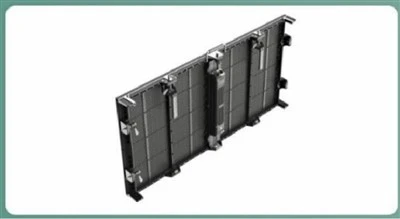
Let’s break this down because there’s a lot of misinformation out there. Real-time data, for this context, means information that updates at intervals as short as a few seconds (or even a fraction of a second for high-frequency use cases, like live event attendee counts) and reflects the most current, unaltered input from a connected source. It’s not a static graphic you uploaded last month; it’s a dynamic feed that ties straight to a data source—think a building’s management system, a point-of-sale terminal, a Wi-Fi network’s foot traffic tracker, or a live sports score API.
First, let’s talk about the core tech that makes this work for indoor LED displays. Unlike old LED billboards that relied on pre-programmed content schedules, modern indoor models run on what we call “display controllers” and “content management systems (CMS)” that are designed for live data integration. A lot of people mix up LED display hardware and its software, and that’s where a lot of broken real-time setups happen. For example, a budget indoor display might come with a cheap controller that only plays local media files, with no ability to connect to external APIs or sensors. That’s fine for static ads, but if you need to pull live data, you need a controller that supports IoT (Internet of Things) protocols—like MQTT, HTTP, or WebSocket—those are the tools that let the screen talk to other devices.
As someone who’s been supplying indoor LED displays for residential, commercial, and industrial clients for over a decade, I’ve seen this play out firsthand. A few years back, we worked with a mid-sized retail chain that wanted to show real-time in-store inventory counts at their entrance, so customers could see exactly how many of a popular jacket were left in the store. Their first attempt was with a low-cost LED screen from a generic supplier; it would freeze mid-update, and the inventory counts were 20 minutes out of date. We swapped in our standard indoor model with a dedicated IoT-enabled controller and a custom CMS tied to their inventory management software, and suddenly the counts updated every 60 seconds without a glitch. That’s the difference between a display that can show real-time data and one that’s just a pretty light box.
Now, let’s get specific about data sources, because that’s another piece of the puzzle. Real-time data feeds for indoor LED displays can come from three main types of sources, and each has its own set of requirements:
- Sensors and on-premise hardware: This includes things like foot traffic counters, temperature sensors, building energy meters, or even security camera analytics. For example, a hospital might want an indoor display in its emergency department showing live wait times, which pulls from a patient check-in system’s sensor data. These sources are usually local, so the display just needs to be connected to the same local network as the hardware to pull data over Ethernet or Wi-Fi.
- Cloud-based APIs: A lot of modern data lives in the cloud—weather data APIs, e-commerce sales trackers, public transit arrival times, or social media feeds. If you’re a coffee shop that wants to show live average wait time pulled from a cloud-based POS system, the display needs to support HTTPS requests to pull that data from the cloud, usually every few seconds.
- Manual input tools: For use cases like office meeting room availability, where a staff member might update the status of a room’s calendar in real time, some indoor displays support a simple web-based interface that anyone with access can update on the fly.
The key here is compatibility. A display that works for real-time weather data won’t necessarily work for live inventory, because each source uses a different protocol. That’s why our team works closely with clients to map their specific data needs before we even recommend a screen—we don’t just sell hardware; we design a full solution that connects to their existing systems.
Wait, but what about common pitfalls? I’ve had clients come to me after a bad experience where their LED display was “supposed” to show real-time data but ended up lagging or failing entirely. Here are the three big mistakes people make:
First, using the wrong display resolution. It sounds trivial, but if you’re trying to show a lot of dynamic data (like live stock prices or a scrolling live event feed), a low-resolution indoor display will struggle to render the update fast enough, leading to choppy, unreadable text. We always recommend at least a 1080p resolution for real-time data use cases, and 4K for larger displays, so the text stays crisp even when updating rapidly.
Second, ignoring bandwidth and network reliability. Real-time data feeds don’t take up a lot of bandwidth, but if your network is spotty, the display will drop connections and stop updating. For indoor displays, we always suggest a wired Ethernet connection (instead of Wi-Fi, which can be inconsistent) for real-time setups. We also build in a backup system that stores the last few data points locally, so if the internet goes out, the display doesn’t just turn black—it keeps showing the most recent valid data until the connection is restored.
Third, using generic content tools. A lot of cheap CMS platforms for LED displays only let you upload static images or pre-made video clips. If you want dynamic, live data, you need a CMS that supports widgets—pre-built, customizable elements that pull live data and display it in real time. For example, we offer a library of widgets for things like live temperature, foot traffic, and clock updates, and we can build custom widgets for specific use cases, like a live feed of a construction site’s progress for a contractor’s indoor project board.
Let me share a recent example to make this concrete. Last quarter, we worked with a university’s engineering department. They wanted an indoor LED display in their main lab hallway to show live data from 12 student robots that were testing autonomous navigation. The display needed to show each robot’s speed, battery level, and current location every 2 seconds. The first setup they tried used a basic LED display from a big-box tech store; it couldn’t handle 12 concurrent data feeds, so it would only update one robot at a time. We installed our indoor LED wall (we do both single panels and wall configurations) with a high-performance controller that could handle multiple parallel IoT connections, and built a custom widget to pull data from the lab’s robot control software. Now, the display updates all 12 robots’ stats in real time, and it’s been running for three months without any issues.
A lot of people also ask if real-time data on indoor LED displays is secure. That’s a totally fair question, especially for businesses dealing with sensitive data like customer health records or financial numbers. All of our indoor LED displays with real-time functionality support encrypted data transfer (HTTPS, MQTT TLS, etc.), so the data being pulled from your internal systems or the cloud can’t be intercepted. We also let clients set role-based access to the CMS, so only authorized staff can update content or adjust data feeds, which is critical for industries like healthcare and finance.
Now, it’s important to set realistic expectations. Real-time data isn’t “perfectly live” in the literal sense—there’s always a tiny delay, usually between 1 and 5 seconds, depending on the data source and connection speed. That’s not a flaw; it’s a standard part of how IoT data works, as the data has to travel from its source to the display. For most use cases, that delay is unnoticeable. If you needed something with sub-second accuracy, like a live sports score for a minor league stadium’s indoor concourse, we can configure our displays to prioritize data transfer to minimize lag, but even then, a 0.5-second delay is normal.
So, to circle back to the original question: Yes, indoor LED displays absolutely can show real-time data—when they’re built with the right hardware, software, and integration with your specific data sources. The mistake many buyers make is treating all indoor LED displays as interchangeable, but the ones built for real-time use are designed differently. They have more powerful controllers, support for IoT protocols, and compatibility with dynamic content widgets, whereas basic models are only for static or pre-recorded content.
If you’re thinking about adding real-time data to your indoor space—whether it’s a retail store showing inventory, a hospital showing wait times, an office showing meeting room availability, or any other use case—you don’t have to figure it out alone. As an indoor LED display supplier, our team doesn’t just sell panels; we walk through your needs, test the integration with your existing systems, and provide ongoing support to make sure your real-time display works reliably for years. We’ve done this for hundreds of clients across industries, and we know how to avoid the common pitfalls that lead to failed real-time setups.
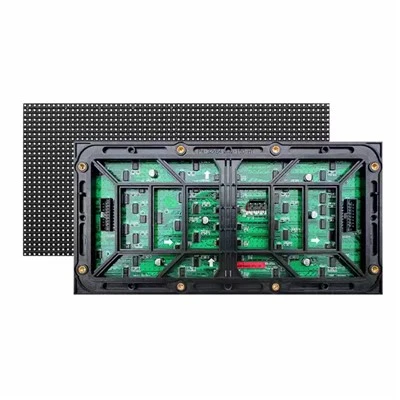
If you’re ready to chat about your specific project, or just have questions about how our indoor displays can support real-time data, we’re here to help.
Chuanglian LED Power Supply References
- International Energy Agency. (2022). IoT Protocols for Commercial Building Management.
- Display Supply Chain Consultants. (2023). Indoor LED Display Performance for Dynamic Content.
- National Institute of Standards and Technology. (2021). Secure IoT Integration for Public Digital Signage.
Shenzhen Starcolor Optoelectronics Co., Ltd.
As one of the most professional indoor led display manufacturers and suppliers in China, we’re featured by quality products and good price. Please rest assured to wholesale discount indoor led display in stock here from our factory. Customized orders are welcome.
Address: 2nd floor, Building A, Hongjingda Industrial Park, Shiyan town, Bao’an District, Shenzhen
E-mail: starcolorled@outlook.com
WebSite: https://www.starcolordisplay.com/
