If you’ve ever stood next to a power plant’s cooling tower or walked past a chemical processing unit, you might have noticed rows of metal tubes snaking up through the structure. Those are condenser tubes, and for decades, most facilities relied on plain, round tubes to do the work of transferring heat and condensing vapor. But over the last 15 years, I’ve watched more and more operations switch to special-shaped condenser tubes, and not just because of a fad—they solve problems regular tubes can’t touch, at least not without huge, costly compromises. Special-shaped Condenser Tube

I run a specialty manufacturing shop, so I get asked this question constantly: “Why go out of your way to shape a tube when round is cheaper to make?” The answer comes down to three things: efficiency, durability, and cost over the life of the equipment, not just the initial purchase. Let’s break this down, because it’s not just about “being different”—it’s about engineering that fixes real pain points operators deal with every day.
First, let’s talk heat transfer, the core job of a condenser tube. Regular round tubes rely on simple surface area: more surface means more heat moves from the hot fluid inside the tube to the coolant outside (or vice versa, depending on the system). But round tubes have a hidden flaw: the way coolant flows around them creates dead spots, areas where the fluid moves too slowly to pick up heat, or even stagnates, leading to fouling. A special-shaped tube—say, an elliptical, finned, or helically ridged design—breaks those dead spots. For example, an elliptical tube’s cross-section means the coolant flow splits around the narrower sides instead of wrapping evenly, creating small, consistent turbulence that scrubs the boundary layer of stagnant fluid off the tube’s surface. That boundary layer is the layer of slow-moving water or gas that insulates the tube; if you disrupt it, heat transfer jumps.
I saw a perfect example of this a few years back with a mid-sized refinery in the Midwest. They were running 2-inch round tubes in their overhead condenser system, and they were struggling to meet their production targets. Their heat exchanger was rated for 95% efficiency, but in practice, it was dropping to 82% during hot summer months, when cooling water temperature spiked. They swapped half their round tubes for our elliptical ones, and within three months, their efficiency jumped to 91%. No new equipment, no extra energy spent pumping coolant—just a shape change. The manager told me they made back the small difference in tube cost in six months from the extra production they gained. That’s not a gimmick; that’s basic thermodynamics applying to a shape most people don’t think about.
Another point on heat transfer: special shapes let you pack more tubes into the same space. Round tubes have to maintain a minimum gap between them to let coolant flow through without channeling (when all the fluid takes the same path, leaving other sections underused). Elliptical or finned tubes can be placed closer together because their shape creates more even flow between them. A few years ago, we worked with a power plant that was upgrading a 10-year-old heat exchanger. They didn’t have space to expand the unit’s shell, so they swapped their 1,200 round tubes for 1,500 specially shaped ones. The result? They got 25% more heat transfer out of the same 40-foot shell. For a power plant, that’s the difference between running at 90% capacity and 100%—no new construction, no downtime for a full replacement, just a tube change.
Now, let’s move to durability, which is where a lot of operators miss the mark. Regular round tubes are prone to two big issues in industrial settings: erosion and fouling. Erosion happens when fast-moving fluids carry small particles—sand, scale, rust—against the tube wall. Over time, that wears a hole, and you have to plug or replace the tube. Special-shaped tubes can be engineered to resist this. For example, we make tubes with a tapered leading edge, a shape that deflects those small particles away from the high-stress wall area instead of letting them hammer against it. A chemical plant in Texas had a problem with their condenser tubes eroding in just two years; they switched to our tapered tubes, and we checked them 18 months later—no signs of wear, even with the same particle load.
Fouling is even more costly. Fouling is when minerals, algae, or organic matter stick to the tube wall, building up an insulating layer that kills heat transfer. Round tubes are terrible for this because the stagnant boundary layer I mentioned earlier is exactly where fouling starts. Once a tiny patch builds, it grows, and soon you’re shut down every six months to clean the tubes. Special-shaped tubes disrupt that stagnant layer so much that fouling has a harder time taking hold. We’ve had customers go from needing to clean their tubes twice a year to once every two or three years after switching to shaped tubes. That’s not just less labor for cleaning—it’s less downtime. For a plant that makes $100,000 a day in revenue, cutting downtime from two days a year to one is $100,000 in extra profit.
Wait, let’s address the elephant in the room: initial cost. It’s true, special-shaped tubes aren’t as cheap as plain round ones. But when you factor in all the other costs—lower energy use, less downtime, longer tube life—they almost always end up being cheaper over the life of the equipment. Let’s do a quick, realistic calculation. A round tube might cost $20, last 5 years. A shaped tube costs $25, but lasts 8 years. You buy fewer of them to get the same heat transfer, and you clean them half as often. Over 10 years, the shaped tube costs you $3.12 per year per tube, vs. $4 per year for the round one. Plus, the energy savings from better heat transfer add up. I’ve seen customers save 10-15% on their cooling water pumping costs alone after switching, because the shaped tubes don’t need as much coolant flow to do the same job.
Of course, special-shaped tubes aren’t one-size-fits-all. Some applications work better with finned tubes, others with elliptical, some with helical grooves. For example, air-cooled condensers (used in locations where water is scarce) rely heavily on external fins to increase surface area, and that’s a special shape you won’t see on a standard round tube. For submerged condensers in chemical processing, we often use rounded, ribbed shapes that resist corrosion from acidic fluids. The key is that a good manufacturer doesn’t just push a single shaped tube—they work with you to figure out what your specific system needs. That’s the part I love most about this work: it’s not about selling a product, it’s about solving a problem that someone else has been struggling with for years.
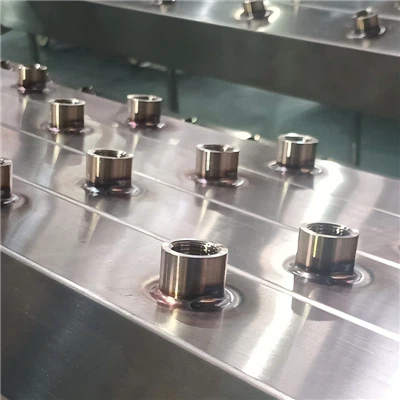
I’ve been in this business long enough to hear operators tell me, “We’ve always used round tubes, so we’re sticking with round tubes.” But every time I see someone make the switch, they come back and tell me they wish they’d done it sooner. Last quarter, a small food processing plant called me because their condenser was failing every winter, causing milk processing to shut down. They switched to our medium-density finned tubes, and this winter, they didn’t have a single unplanned shutdown. The owner sent me a cake last month, said the tube change saved them $120,000 in lost product and repairs. That’s the kind of win that makes the extra work of designing and making special-shaped tubes worth it.
Special-shaped Condenser Tube If you’re currently dealing with condenser inefficiencies, frequent shutdowns, or rising energy costs, don’t just stick to what you’ve always known. Reach out to discuss your specific needs—whether you’re updating an existing heat exchanger, building a new cooling system, or dealing with a persistent fouling or erosion problem, we can work together to find the right special-shaped tube solution for your operation. Don’t wait for another shutdown to cost you thousands; let’s talk about how shaped tubes can help you run more efficiently, with less downtime, for longer.
References
- Hewitt, G. F. (2008). Heat Transfer in Condensers and Evaporators. CRC Press.
- Thulukkanam, K. (2013). Heat Exchanger Design Handbook. CRC Press.
- Müller-Steinhagen, H., & Jin, Y. (2006). Fouling of Heat Exchangers: Mechanisms, Mitigation, and Remediation. Heat Transfer Engineering, 27(8), 3-16.
- Shah, R. K., & Sekulic, D. P. (2003). Fundamentals of Heat Exchanger Design. John Wiley & Sons.
- Bell, K. J. (1988). Petroleum Refinery Cooling Systems: Design and Operation. Gulf Professional Publishing.
China Super Tech Co., Ltd.
As one of the most professional special-shaped condenser tube manufacturers and suppliers in China, we’re featured by quality products and good service. Please rest assured to wholesale OEM special-shaped condenser tube from our factory. Also, custom service is available.
Address: Wangjing Science and Technology Park, Guangshun North Street, Chaoyang District, Beijing
E-mail: sales@316liquidcooling.com
WebSite: https://www.316liquidcooling.com/
