When I first started working as an oil filling machine supplier over a decade ago, I thought the question “what types of oil can our machines handle?” would have a simple answer. Back then, most of our clients were small lubricant manufacturers who only needed to fill one or two oil grades—engine oil, hydraulic fluid, maybe some light vegetable oil for food packaging. Now, 12 years later, I sit in our workshop and watch technicians adjust filling nozzles for everything from thick industrial gear oil to delicate cosmetic argan oil, and I realize how much the oil industry has changed. Clients come to me with all kinds of specs, and more often than not, they’re surprised when I explain that a single filling machine isn’t one-size-fits-all. That’s why today, I want to break down exactly what types of oil our filling machines can handle, how we adapt them, and why getting this right matters more than you might think. Oil Filling Machine
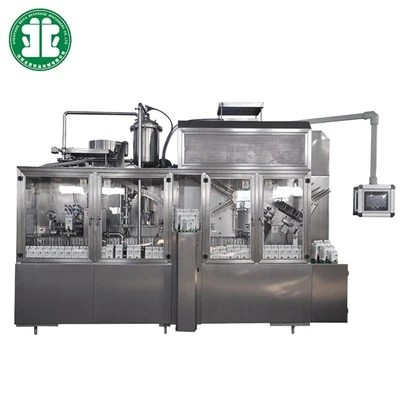
Let’s start with the most common category: industrial lubricants. This is where we got our start, and it’s still the largest segment of our business. Industrial lubricants include gear oils, hydraulic oils, compressor oils, and turbine oils. These oils are typically thick, high-viscosity fluids—think of cold honey, not the watery stuff you put on toast. Early in my career, we used to use standard piston fillers for these, but we quickly learned that thick oil flows differently. If the nozzle was too small, the oil would get stuck halfway through the fill line, leading to inaccurate volumes. If the pressure was too high, it would foam, especially with synthetic industrial oils that have additives to reduce friction. Now, our machines for industrial lubricants come with adjustable nozzle sizes and pressure controls. Last year, we installed a line for a wind turbine manufacturer that needed to fill 55-gallon drums with a heavy synthetic turbine oil. The viscosity was 460 cSt at 40°C—way thicker than the 10w-30 motor oil I put in my truck. We had to swap in wider, heated nozzles to keep the oil from getting too viscous as it moved through the piping. That machine has been running for 18 months with zero issues, and the client just placed an order for a second line. It’s this kind of hands-on adaptation that makes our machines work for heavy industrial use.
Next up: automotive oils. This is another big one, and it’s a category that’s split between conventional and synthetic oils. Conventional motor oils are thinner, usually around 10 cSt for 5w-30, so they flow much easier than industrial lubricants. That means our machines here can use smaller nozzles and faster fill speeds, which is perfect for manufacturers filling small bottles or jugs. But synthetic motor oils—especially the full-synthetic varieties—are trickier. They often have additives like detergents and anti-wear agents that can cause foaming if not handled correctly. A few years back, a client came to us who was having problems with their filler: their 1-gallon synthetic motor oil bottles were coming up 2-3 ounces short, and some had foam on the top that made the labels not stick. We went to their factory, took readings of the oil’s viscosity and surface tension, and adjusted our filler’s flow rate and added a degassing valve before the fill head. That fixed the problem immediately. Now, we include degassing systems as standard on all automotive synthetic oil filling machines, because we’ve learned that even small amounts of foam can ruin a batch.
Then there’s the food-grade oil category. This is where things get really specific, because food safety isn’t negotiable. We handle everything from canola oil, sunflower oil, and olive oil to specialty oils like sesame and avocado oil. The FDA and other regulatory bodies require that all equipment used for food oil filling is made with materials that won’t contaminate the product—so stainless steel 304, not the regular carbon steel we use for some industrial parts. The viscosity here varies too: light oils like canola are super thin (around 30 cSt), while extra virgin olive oil is a bit thicker, around 80 cSt. For small-scale clients, we use rotary piston fillers that are gentle enough not to break delicate olive oil bottles, which are often glass with thin necks. For larger operations, we have inline fillers that can handle up to 10,000 bottles an hour. Last year, a artisanal olive oil producer in Italy contacted us—they were hand-filling 500ml bottles with their single-origin oil and needed to scale up without losing the bottle’s shape (it’s a unique amber glass with a curved neck). We modified a standard inline filler to match their bottle’s neck size, and adjusted the fill speed so the oil doesn’t splash and leave marks on the glass. They told us their sales went up 20% after switching to the new line, because the bottles looked cleaner and the fill was always consistent. That’s the kind of impact we strive for.
Don’t forget about hydraulic oils, which I sort of lumped in with industrial lubricants earlier, but they deserve their own note. Hydraulic oils are used in everything from construction equipment to factory machines, and they can be either mineral-based or synthetic. The key challenge here is that they often need to be filled into large containers—5-gallon pails, 55-gallon drums, even bulk tanks. Our machines for hydraulic oils are built to handle heavy loads, with drum handling systems that can lift and position 55-gallon drums safely. I remember a client from a construction company who wanted to fill 5-gallon pails for their fleet. They were using a manual pump before, which was slow and messy—workers would spill oil on the warehouse floor every day. We installed a semi-automatic hydraulic oil filler with a weighing system, so every pail gets exactly 5 pounds of oil, no more, no less. It cut their waste by 90% and reduced the time per pail from 2 minutes to 20 seconds. That’s when I realized how much a good filling machine can impact a client’s bottom line, not just their production speed.
Now, there are the specialty oils—this is the category that keeps us on our toes. We’ve handled everything from essential oils (like tea tree and lavender) to cosmetic oils (argan, jojoba) and even some pharmaceutical oils. Essential oils are super volatile and have low viscosity, so they evaporate easily. That means our filling machines for essential oils need sealed nozzles to prevent leakage and evaporation. A few years back, a client who makes natural perfumes came to us with a problem: their essential oil blends were evaporating during filling, so the bottles were coming up short. We added a closed-loop filling system, which means the nozzle is sealed against the bottle while it fills, so no air can get in or out. That stopped the evaporation immediately, and they’ve been a repeat client ever since. Cosmetic oils, on the other hand, are often thicker and more sensitive to contamination. We have to make sure all parts in contact with the oil are completely passivated stainless steel, and the machines are easy to disassemble for cleaning—something our team spends a lot of time designing, because cosmetic and pharmaceutical clients have strict hygiene rules.
I should also mention the oils that don’t fit neatly into these categories, like biofuels. Biodiesel and ethanol-based fuels have different properties than lubricants or food oils—they’re more corrosive, for one thing. So our machines for biofuels are made with corrosion-resistant materials like aluminum or coated stainless steel, and we have to make sure all seals are compatible with the fuel. A biofuel producer from Texas worked with us a few years ago to modify a filler that was originally for diesel, because their biodiesel had a higher ethanol content that was eating through the old seals. We switched to Viton seals, which are resistant to ethanol, and they’ve been using that line for their production ever since.
But here’s the thing: it’s not just about the oil type. Even if two oils are the same viscosity, their surface tension or chemical properties can change how a filling machine handles them. That’s why we don’t just sell a machine and send it out the door—we work with every client to test their specific oil before we design the machine. We have a small lab in our workshop where we can test viscosity, surface tension, corrosion, and other properties, so we can adjust the machine’s settings accordingly. Last month, a client brought in a sample of a new vegetable-based lubricant they were developing, and we tested it and found that it had a higher surface tension than standard canola oil. We adjusted the filler’s nozzle angle and reduced the flow rate, so when they run it, it doesn’t splash. That kind of customization is what sets us apart from other suppliers who just offer one standard machine for all oils.
I’ve seen a lot of clients make the mistake of buying a generic filling machine because it’s cheaper, and end up regretting it. They don’t account for their specific oil’s properties, so the machine doesn’t fill accurately, wastes product, or breaks down quickly. That’s why our approach is to ask a lot of questions upfront: what type of oil, what’s its viscosity, what containers are you using, what’s your production speed, do you need to meet any regulatory standards? We don’t just sell a machine—we solve a problem.
If you’re in the market for an oil filling machine, whether you’re a small artisanal producer or a large industrial manufacturer, don’t just look for a machine that says “oil compatible.” Ask about the types of oil it’s been tested with, what materials the wetted parts are made of, how adjustable the settings are, and what kind of support comes with it. We’ve been doing this for over a decade, and we’ve worked with every type of oil you can think of—from thin essential oils to thick industrial gear oils. We’ve had to troubleshoot foaming issues, evaporation problems, viscosity changes in cold weather, and even clients who needed to switch between multiple oil types on the same line.
At the end of the day, the goal of an oil filling machine is simple: to fill every container with the exact amount of oil, quickly, cleanly, and safely. But the details of how to do that depend entirely on the oil you’re handling. That’s why taking the time to understand your oil’s properties and choosing a machine that’s customized for it makes all the difference.
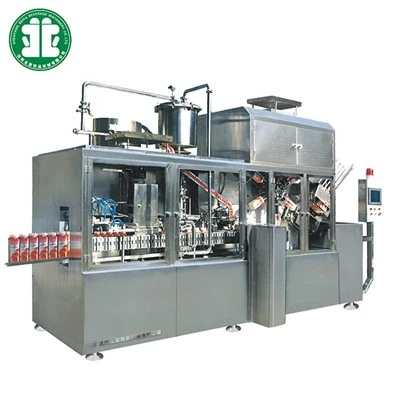
If you’re ready to talk about your oil filling needs, whether it’s for a single type of oil or multiple grades, we’re here to help. We can send you a sample kit to test, walk you through our machine options, and work with you to design a solution that fits your production line. Don’t settle for a one-size-fits-all machine that will cause headaches down the line—reach out, and let’s find the right filling machine for your oils.
Gable Top Lotion Filling Machines References
- Society of Petroleum Engineers. (2020). Viscosity Variations in Industrial Lubricants: Impact on Filling Equipment. SPE International.
- FDA Food Safety and Inspection Service. (2021). Equipment Standards for Food-Grade Oil Processing and Filling. U.S. Department of Agriculture.
- Cosmetic, Toiletry, and Fragrance Association. (2019). Hygiene Requirements for Filling Essential and Cosmetic Oils. CTFA Guidelines.
- International Organization for Standardization. (2022). ISO 9001:2015 Quality Management Systems for Industrial Filling Equipment. ISO.
- American Society of Mechanical Engineers. (2021). Design Considerations for Handling Corrosive Biofuels in Filling Machines. ASME International.
Shenyang Beiya Beverage Machinery Co., Ltd.
With abundant experience, we are one of the most professional oil filling machine manufacturers and suppliers in China. If you’re going to buy customized oil filling machine made in China, welcome to get quotation from our factory. For price consultation, contact us.
Address: No. 2-1, Tongling Street, Yuhong District, Shenyang City, Liaoning Province, China
E-mail: market@sybeiya.com
WebSite: https://www.chinafilling.com/
