Hey there, if you’re scrolling here, chances are you’re staring at a pile of blue HDPE pipe options (all 100% virgin, no recycled junk, for what it’s worth) and thinking, “What the hell size do I actually need?” I get it—when I first started out in this game back in 2012, I ordered a 6-inch pipe for a farm irrigation job and had to drive back 45 mins to swap it for 8 inches because the cows kept blowing the line when they turned on the tap. Lesson learned: picking the wrong HDPE pipe size isn’t just a “oops” moment—it’s a headache that costs you time, money, and way too many late-night calls to your plumber buddy. This post’s gonna break it down like we’re chatting over a coffee, no stuffy engineering jargon, just the real stuff I tell my clients every day. HDPE Pipes and Fittings
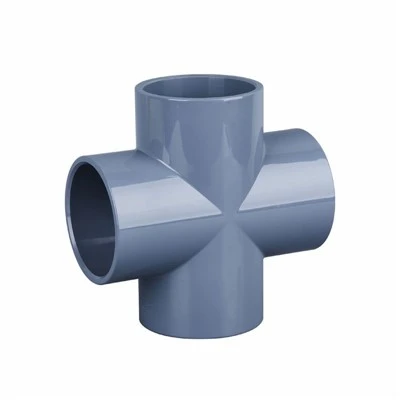
First off, let’s cut through the confusion: HDPE pipe sizes aren’t random. They’re based on two big things—your flow rate (that’s how much water, gas, or whatever’s moving through the pipe per minute) and the distance that stuff has to travel. I see so many newbies skip the flow rate part and just grab whatever size they think looks right, and nine times out of 10, that’s how you end up with a pipe that’s too small. Let’s talk flow rate first, ’cause that’s the foundation. If you’re doing residential water supply, for example, a standard bathroom faucet moves about 2.2 gallons per minute (GPM), a kitchen sink is 2.5 GPM, and a shower head is around 2.5 GPM too. If you’re doing a whole house, that adds up to like 10 GPM for a small home, right? Wait no—wait, if you have two showers going at once, maybe two outdoor hoses, that jumps to 20-25 GPM. Here’s the rule of thumb I use: for flow rates under 25 GPM, go with ½-inch or ¾-inch HDPE. For 25-50 GPM, 1-inch pipe. Over 50 GPM? You’ll need 1 ½-inch or bigger, depending on how far it’s going.
But hold up—distance matters so much here, and this is where most people mess up. If you’re running a pipe 50 feet to a garden hose bib, a ½-inch pipe is totally fine for 10 GPM. But if you’re running that same 10 GPM 500 feet to a sprinkler system? That ½-inch pipe will lose so much pressure by the time it gets there, your sprinklers will be spitting instead of spraying. HDPE has this thing called friction loss—basically, when the water rubs against the inside of the pipe, it slows down. The bigger the pipe, the less friction loss, right? So let’s do a quick example: if you need to move 15 GPM 300 feet, I’d tell you ¾-inch is okay. But if that same 15 GPM has to go 1,000 feet? You’re gonna want 1-inch, minimum—otherwise, you’ll lose like 30% of your pressure by the end of the line, and that’s just wasted water. I once had a landscaper client who skipped this step for a golf course sprinkler run, went with 1-inch for a 1,200-foot line, and had to add extra pumps just to get enough pressure. He still owes me a cold beer for that mistake.
Next up, what you’re using the pipe for. HDPE isn’t just for water—we sell it for gas lines, sewer, irrigation, even industrial stuff. Each use has its own size guidelines, and I’ve seen people use the wrong size for their application and end up with leaks or bursts. Let’s break down the common ones: residential potable water (drinking water) is the most straightforward. For main water lines coming from the street to your house, that’s usually 1 ½-inch to 2-inch—most municipalities require a minimum of 1 ½-inch for single-family homes, by the way, so don’t skip that check with your local building department. If you’re doing a commercial building, like an apartment complex or office, you’ll want to bump up to 3-inch or 4-inch main lines, depending on how many units you have. For agricultural irrigation, which is another big one for us, it’s all about the number of sprinklers and the row length. A small vegetable farm might get away with 2-inch laterals, but a big corn farm with center pivots will need 8-inch or even 10-inch pipe for the main trunk lines. I worked with a 50-acre corn farm last year that tried to use 6-inch for their main, and when they turned on the pivot, the pipe couldn’t keep up—ended up with dry spots all over the field. They swapped to 8-inch, fixed the issue, and saved like 100 gallons an hour in wasted water.
Gas lines are different, too—wait, we sell HDPE for natural gas, right? You can’t use the same size as water here, because gas is less dense. For residential natural gas lines, a ¾-inch pipe works for a stove and water heater, but if you have a furnace that’s 100,000 BTU or more, you’ll need 1-inch. Commercial gas lines, like for a restaurant kitchen, will need 2-inch or bigger, depending on the equipment load. Sewer lines? HDPE sewer pipes are sized based on how much wastewater your property produces, and local codes usually specify minimum sizes—most residential sewer lines are 4-inch, and commercial is 6-inch or 8-inch. Skip that code check, and you might get a fine, or worse, a clog that backs up into your basement.
Wait, also—pressure rating. I can’t stress this enough, and it’s something a lot of buyers overlook. HDPE pipe comes in different pressure classes, like SDR 7, SDR 11, SDR 17, etc. SDR stands for Standard Dimension Ratio, which is the outer diameter divided by the wall thickness. The lower the SDR, the thicker the wall, the higher the pressure it can handle. If your line is going to be under high pressure—like a main water line that runs 60 PSI, or a gas line—you can’t grab a thin-walled SDR 17 pipe for that, because it’ll burst. For residential potable water, SDR 11 is usually enough, but for main lines that carry high pressure, go with SDR 7 or SDR 9. If you’re working on a low-pressure application, like a gravity-fed drip irrigation line, SDR 17 is totally fine—cheaper, lighter, easier to install. I always tell clients to match the SDR to their pressure needs, otherwise you’re wasting money on a pipe that’s overkill or buying one that’ll fail.
Let’s talk about a common mistake I see: guessing. A guy came to me last month for a pool fill line, said he needed 2-inch pipe, and we calculated his flow rate was 30 GPM over 200 feet. I told him 1 ½-inch would work, save him a bit of cash. He tried the 2-inch first, and it was overkill—cost him $20 more for material, and was harder to dig the trench for. On the flip side, another client tried to go small: he needed to fill a stock tank, 10 GPM over 100 feet, and grabbed ½-inch. The tank took twice as long to fill, and he had to run a second line to make it work. So how do you actually calculate the right size, instead of guessing? Let’s make it simple, no fancy engineering calculator needed.
First, list out all the fixtures or equipment you’re connecting. Add up their GPM: faucet (2.2), shower (2.5), hose (10), etc. If it’s irrigation, add up the GPM of all your sprinklers. If it’s gas, add up the BTU ratings and convert that to cubic feet per hour (CFH)—usually, 1 CFH of natural gas is about 1,000 BTU. Then, add 10-20% extra to that total. Why? Because no matter how well you plan, you might add a new fixture later, or someone will run two hoses at once, and you don’t want to stress the pipe. Then, check the distance. Use a friction loss chart—we keep them on hand for all our clients, so you don’t have to hunt one down. For example, 20 GPM over 300 feet: ¾-inch pipe has a friction loss of about 3 PSI per 100 feet, so total loss is 9 PSI, which is totally fine. 20 GPM over 1,000 feet: 1-inch pipe has a friction loss of about 2 PSI per 100 feet, total 20 PSI, which is still manageable. ¾-inch pipe over 1,000 feet would be 8 PSI per 100 feet, that’s 80 PSI loss—your pressure would be gone by the end. That’s exactly why distance is non-negotiable.
Another thing to consider: installation. Wait, it might seem like a sizing topic, but the size affects how easy it is to work with. Smaller HDPE pipe (½-inch, ¾-inch) is lightweight, easy to carry, can be pulled through trenches without a backhoe. Bigger sizes (6-inch, 8-inch) are heavy, need heavy equipment to lay, so if you’re doing a DIY project, you don’t wanna go bigger than 1-inch or 1 ½-inch unless you have help. Also, fittings—you can’t mix sizes randomly. If your pipe is 1-inch, your adapters, elbows, tees all need to be 1-inch, right? That’s basic, but I’ve had clients come back with mismatched fittings because they grabbed the wrong size at the hardware store, and that caused leaks. We stock all the fittings to match every HDPE size we sell, so that’s a plus for our clients—no running around to three different stores for parts.
What about if you’re still unsure? That’s totally normal. I get at least 10 calls a week from people who say “I don’t know my flow rate, can you just tell me what size to get?” The short answer is, tell us what you’re using it for, how far it’s running, and if it’s residential, commercial, or agricultural, and we’ll walk you through it. A lot of suppliers might just push the biggest size, but we don’t do that—we help you get the exact size you need so you don’t waste money. Last quarter, a small business owner came to us for a new soda line at his restaurant. He had no clue what size, we asked for the number of soda machines, how far the line ran, helped him pick 2-inch, which was perfect—he didn’t overbuy, and the line works like a charm.
Wait, also—do I mention underground vs above ground? If your pipe is going underground, you might need a thicker wall for protection from rocks or digging, but that’s where the SDR rating comes in. For above ground, like a sprinkler head line that’s visible, you can go with a thinner SDR, since it’s not under pressure from soil. That’s another quick tip that saves people from buying the wrong pipe.
Let’s wrap this up with a quick cheat sheet, so you don’t have to scribble notes:
- Under 25 GPM, <500 feet: ½-inch or ¾-inch
- 25-50 GPM, <1,000 feet: 1-inch
- 50-100 GPM, <1,500 feet: 1 ½-inch
- Over 100 GPM, or over 1,500 feet: 2-inch+
Add 10% to your total flow rate for future use, and match SDR to your working pressure. Check your local codes for minimum required sizes—they’re there for a reason, to prevent bad installations.
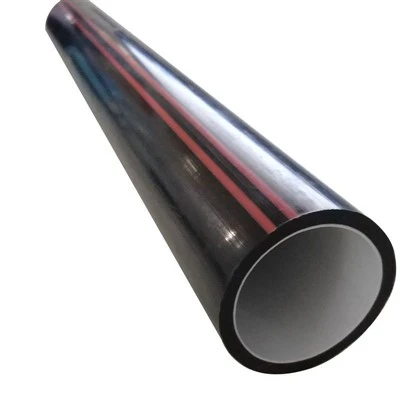
At the end of the day, picking the right HDPE pipe size isn’t rocket science, but it’s easy to mess up if you skip the details like flow rate, distance, and your application. I’ve been doing this for over a decade, and the number one complaint I hear from clients who buy the wrong size is “I should’ve asked more questions.” So if you’re still on the fence, don’t guess. Reach out, tell me your project, and we’ll help you get the exact size you need—no upselling, no confusing jargon, just straight answers. We have all sizes in stock, ready to ship, and fittings to match every one, so you can get your project done without the hassle of running back and forth. Don’t make the same mistake I made with that cow-blowing line back in 2012—let’s get the size right the first time.
MPP Pipe References:
- American Water Works Association. (2020). Standard Specification for Polyethylene (PE) Pressure Pipe and Tubing, 1/2 in. Through 63 in., for Water Distribution and Transmission. AWWA C901.
- National Plumbing Code of the United States. (2021). Chapter 6: Water Supply and Distribution Piping. International Code Council.
- HDPE Pipe Institute. (2019). Friction Loss Handbook for Thermoplastic Pipes. HDPE Pipe & Fittings Association.
- Agricultural Irrigation Association. (2022). Sizing Guidelines for Polyethylene Irrigation Pipe. Irrigation Association Technical Report.
Shanxi Kaisheng Plastic Co., Ltd.
As one of the most professional hdpe pipes and fittings manufacturers and suppliers in China, we’re featured by quality products and good price. Please rest assured to buy customized hdpe pipes and fittings made in China here from our factory. Welcome to contact us for quotation.
Address: No.72, Area S, Gate 1, Haohai Wumart, Fendong Street, Xiaodian District, Taiyuan City, Shanxi Province
E-mail: sxkssj8@163.com
WebSite: https://www.sx-kssj.com/
