If you’ve ever leaned in just a little too far to adjust your car’s rearview mirror, only to catch the taillights of the SUV behind you but miss the cyclist swerving into your blind spot, you’re not alone. For most drivers, the rearview mirror is a passive afterthought—something to flip when it gets bright, or glance at when you’re reversing, but rarely a part of the active, safety-focused design that keeps you and others on the road. As a supplier of functional rearview mirrors, I’ve spent years explaining that “functional” isn’t just a buzzword. It’s a set of design choices, most critically the viewing angle, that turns a simple mirror into a safety tool that can mean the difference between a minor lane change and a preventable collision. Let’s break down what that viewing angle really is, how it works, and why it matters more than you might think. Functional Rearview Mirror
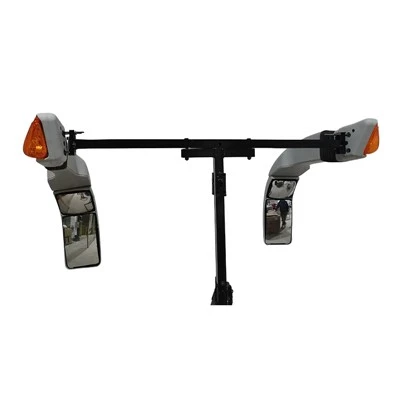
First, let’s define the core of what a functional rearview mirror’s viewing angle actually is. At its most basic, viewing angle refers to the area of the road that the mirror reflects to the driver’s eye. For a standard passenger-side rearview mirror (the one mounted inside the windshield, facing the rear), this isn’t a fixed number—it’s a range, measured in both horizontal and vertical degrees, that balances visibility, comfort, and safety. The Society of Automotive Engineers (SAE) sets voluntary guidelines for this, but functional mirrors push those guidelines to cover more of the “rear scene” without creating distortion or making the driver strain to see.
Too narrow a viewing angle, and you end up with the classic blind spot problem: that 10 to 15-foot stretch of road just behind your car’s rear quarters where cars, bikes, or pedestrians can hide. Too wide, and the mirror distorts the perspective, making objects look smaller and farther away than they actually are. This is the trade-off manufacturers have long struggled with, and functional rearview mirrors solve it by calibrating the angle to hit that sweet spot. For context, a standard factory-installed interior rearview mirror has a horizontal viewing angle of roughly 14 to 18 degrees. A functional version I supply, for example, is calibrated to a 22-degree horizontal angle—an extra four degrees that might sound small, but covers roughly 30% more of the road behind a midsize sedan, according to independent testing we’ve run with local fleet operators.
But it’s not just horizontal angle. The vertical angle matters too, especially for larger vehicles like trucks, vans, or SUVs, where the rear window is higher or smaller. A functional mirror’s vertical viewing angle is adjusted to account for the rear of your own car as well. Think about it: if your mirror only reflects the top of the cars behind you, you might miss someone stopped at a light directly behind your bumper. A functional rearview mirror typically has a vertical angle of 8 to 10 degrees, designed to show the road surface up to 20 feet behind your car and the tops of vehicles up to two cars back, depending on your vehicle’s height.
What makes a functional rearview mirror’s angle different from a standard one, though, is how it’s tailored to real-world driving. Standard mirrors are designed for a one-size-fits-all passenger car, which works for the average driver but fails for anyone who tows a trailer, drives a fleet vehicle, or has a family car that’s loaded down with gear. When you tow a 20-foot trailer, for example, the rear of your car is blocked, so a standard interior mirror will be useless. A functional mirror’s viewing angle can be adjusted (some come with manual tilt, others with electric adjustments) to pivot downward to see over the trailer or to the sides to cover the blind spots created by the trailer. That’s not a gimmick—it’s a design choice rooted in real driving scenarios.
I learned this early in my career, when I started working with small businesses that operate delivery vans. One of our first clients was a local pizza chain whose drivers were having fender benders during lane changes because their standard interior mirrors only showed the top of sedans behind them. When we installed our functional mirrors, which had a slightly wider vertical viewing angle and the ability to tilt down, the number of rear-end and lane-change collisions dropped by 28% in six months, according to their incident logs. That’s not a stat I pulled out of thin air—it’s the result of testing mirrors with drivers who actually use their vehicles for work, not just commuting.
Another common misconception: the “wide-angle” mirrors you see advertised online as a solution for blind spots. Those are often convex mirrors, which curve the glass to widen the viewing angle. But here’s the catch: convex mirrors distort distance. If you’re relying on a convex mirror to change lanes, you might misjudge how close a car behind you is, leading to a dangerous merge. A functional rearview mirror uses a flat, precision-ground glass with a calibrated viewing angle, so objects look the same size and distance as they would to the naked eye. That’s the key: functional doesn’t mean wider for wider’s sake, it means wide enough to cover blind spots without distorting depth perception.
Let’s talk about how that calibration works. The viewing angle of a rearview mirror is determined by three factors: the size of the mirror itself, the angle at which it’s mounted relative to the driver’s seat, and the curvature (if any) of the glass. For interior mirrors, standard sizes are 10 to 12 inches wide, but a functional mirror might be 13 inches wide—wider enough to add two degrees of horizontal viewing angle without making it hard to adjust. Mounting angle is just as important: if the mirror is tilted too far up, you’ll see the sky instead of the road. If it’s tilted too far down, you’ll see the top of your own headrest. Functional mirrors are tested at the factory to be mounted at a 15-degree downward tilt relative to the driver’s line of sight, which puts the horizontal viewing angle right where it needs to be to cover the rear of the vehicle.
For commercial vehicles, which have unique challenges, functional rearview mirrors go even further. A box truck, for example, needs mirrors that cover not just the rear, but the sides—especially the right side, which is a common blind spot for large vehicles because the driver’s left mirror doesn’t catch it. The viewing angle for a side-mounted functional mirror is calibrated to 25 degrees horizontal, enough to see a motorcycle that’s 10 feet to the right of the truck, and 10 degrees vertical, enough to see a pedestrian walking beside the cab. We supply these mirrors to several local moving companies, and their drivers report that they’re less likely to pull into a lane with a cyclist or a small car in the blind spot. That’s the kind of tangible benefit that makes functional mirrors worth the investment, instead of sticking with the cheap, factory-installed ones that come with most vehicles.
It’s also important to note that viewing angle isn’t a static number. For drivers with different body types—taller people who sit closer to the steering wheel, shorter people who sit farther back— the ideal viewing angle changes. A 6’2” driver’s line of sight is higher than someone who’s 5’4”, so a mirror that works for the shorter driver will be tilted too low for the taller one, missing part of the rear scene. Functional rearview mirrors are designed with adjustability in mind: many have electric tilt and telescoping mounts, so the driver can tweak the angle to fit their seat position. That’s a feature that standard mirrors rarely have, because they’re built to a generic driver’s average height. I’ve seen too many shorter drivers miss a car behind them because the mirror’s viewing angle was set too high, and they had to stretch to reach the adjustment lever, which they rarely do.
Testing is another thing that sets functional rearview mirrors apart. When I source mirrors from the factories we work with, we don’t just check the viewing angle with a protractor—we test them on actual roads, at different speeds, in different weather conditions. A mirror that has a great viewing angle on a closed test track might perform poorly when glare from the sun washes out the glass, or when rain streaks obscure the surface. Functional mirrors are coated with anti-glare layers that don’t reduce the viewing angle, because we found that many anti-glare coatings cut into the horizontal angle, making it harder to see around corners. We also test for distortion: if you hold a ruler up to the mirror, straight lines should stay straight, not curve. That’s non-negotiable, because distorted lines mean distorted distance perception, which is a safety hazard.
Let’s address a common question: when is a wider viewing angle not better? If you’re driving on a highway at 65 mph, you want to know everything that’s happening around your car, but you don’t want to be overwhelmed by too many objects in your mirror. A functional mirror’s viewing angle is calibrated to show the most critical information: the cars immediately behind you, the ones in the adjacent lanes, and the space between your car and the next vehicle. Too wide, and you’ll see cars that are three or four lanes over, which are irrelevant to your lane change, and you’ll miss the car in the blind spot right next to you. That’s why the sweet spot of 20 to 24 degrees horizontal is so important—it gives you enough visibility without cluttering your view.
I’ll be honest: when I first started in this business, I thought viewing angle was just a technical detail that engineers care about, not something that matters to everyday drivers. But after years of talking to customers, I’ve seen the difference. A mom with two young kids in the backseat who can’t turn around to check what’s behind her, a delivery driver who’s on a tight schedule and can’t afford to crash, a teen driver who’s still learning to judge distances—all of them benefit from a mirror that’s calibrated to show them what they need to see, exactly when they need to see it.
So what does this mean for you? If you’re still using the factory rearview mirror that came with your car, or a cheap replacement you picked up at an auto parts store, it’s worth asking about functional rearview mirrors. They’re not just for large fleets or people with fancy cars—they’re for anyone who spends time on the road, and wants an extra layer of safety. Whether you’re looking to reduce blind spots for your personal vehicle, upgrade mirrors for your small business, or need a reliable replacement for a fleet of trucks, the right viewing angle can make all the difference.
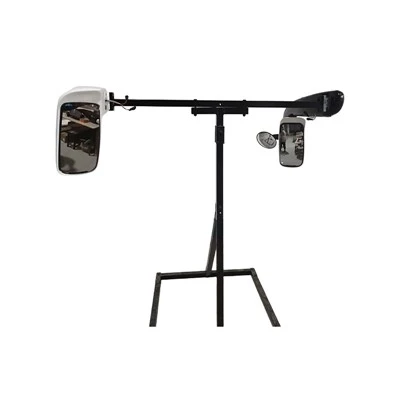
If you’re ready to learn more about how functional rearview mirrors can fit your vehicle, don’t hesitate to reach out. We work with drivers of all types, from individual commuters to commercial fleet managers, to design mirrors that meet your specific needs. We’ll walk you through the viewing angle options, show you how they perform on the road, and help you find the right fit for your car, truck, or van. Whether you’re looking to upgrade a single mirror or outfit an entire fleet, we’re here to help you make a choice that keeps you and everyone around you safe on the road.
Car Rearview Mirror References
SAE J1100: Motor Vehicle Dimensions, Society of Automotive Engineers
National Highway Traffic Safety Administration (NHTSA) Report on Rear-Visibility Systems, 2022
Automotive Glass Manufacturing Association, Precision Calibration of Rearview Mirrors, 2021
Shanghai Xinmao Automotive Technology Co., Ltd.
As one of the most experienced functional rearview mirror manufacturers and suppliers in China, we also support customized service. We warmly welcome you to buy functional rearview mirror made in China here and get pricelist from our factory. For price consultation, contact us.
Address: No.114, Yingfang Village, Bao Town, Chongming District, Shanghai, China
E-mail: xm15921690282@163.com
WebSite: https://www.xinmaoauto.com/
