If you’ve ever worked in air cargo, you’ve probably seen the pallets—sturdy, aluminum-framed structures that slide into wide-body jet holds, loaded with everything from electronics to perishables, pharmaceuticals, and even live animals. I’m [Your Name], a partner at an air cargo pallet supplier that’s been in the game for 12 years, and I get asked a version of the same question at least once a week: Can air cargo pallets be reused? For too long, the narrative around air cargo packaging has been that it’s a single-use, disposable commodity—one that gets loaded, unloaded, and scrapped on the same trip. But over decades of working with airlines, freight forwarders, and ground handlers, I’ve seen firsthand that reuse isn’t just possible: it’s a smarter, more sustainable, and more cost-effective choice than manufacturing new pallets every time. Let’s break down the science, the process, and why reusing pallets might be the best decision you make for your cargo operations this year. Air Cargo Pallet
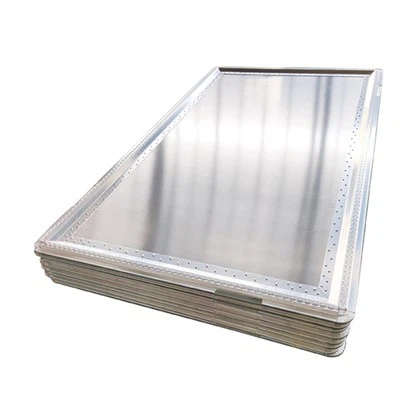
First, let’s set the baseline for what an air cargo pallet actually is, because not all pallets are built the same. Unlike wooden pallets you’d use for a warehouse, air cargo pallets are engineered for extreme conditions. They’re made from high-grade aluminum alloys, with a reinforced lattice frame, a anti-slip polyester surface coating, and edge protectors that can withstand 40,000+ lbs of cargo, temperatures ranging from -65°F (for refrigerated pharmaceuticals) to 120°F, and the rough handling of air freight: being dragged across tarmacs, stacked in cargo holds, and secured with netting or straps for takeoff and landing. This durability is not a marketing buzzword—it’s a regulatory requirement. The International Air Transport Association (IATA) sets strict specifications for unit load devices (ULDs), which is the formal name for air cargo pallets (and containers, though we’ll focus on pallets here). A pallet that meets IATA 13A or 16A standards, the most common wide-body pallet sizes, is designed for repeated use, not one-off trips.
The next question is: what happens to pallets that do get scrapped, and why that’s avoidable. For years, many ground handlers would write off pallets after even minor dents or scratches, because they assumed any damage would compromise safety. That’s a myth. I’ve seen a pallet with a 2-inch dent in one frame rail that still passed all safety inspections and logged another 100 trips without incident. Modern pallet repair technologies have advanced so much in the last decade that small dents, loose fasteners, or worn surface coatings can be fixed in hours, not days. At our facility, we have a full-time team of technicians certified by IATA to repair pallets to original specifications; we’ve calculated that for a mid-sized pallet, repairing damage costs about 15% of the cost of a new pallet, while extending its lifespan by 5 to 7 years. That’s a huge savings, but it also reduces waste: the global air cargo industry moves roughly 55 million tons of goods a year, and each ton requires on average 0.2 pallets—meaning over 11 million pallets enter circulation annually. If just 30% of those were repaired instead of replaced, that would keep over 3 million tons of aluminum out of landfills each year.
Of course, reuse isn’t without its challenges, which is why many operators still default to disposable pallets. The biggest barrier is logistics: tracking pallets across multiple parties. A pallet might be loaded on a Delta flight from Atlanta to Amsterdam, unloaded by a ground handler in Schiphol, stored in a warehouse in Rotterdam, and then loaded onto a KLM flight to Tokyo two weeks later. Without a consistent tracking system, pallets often get lost, mislabeled, or stuck in transit, making reuse unfeasible. That’s why in the last five years, our company invested in GPS-enabled pallet tags that update in real time, so you can see exactly where a pallet is, when it needs to be returned, and what its maintenance history is. We also offer a pooling program, where we own a fleet of 20,000 pallets that operators can book for a one-time trip, then return to our nearest facility after use for inspection, repair, and redeployment. For small forwarders that don’t have space to store their own pallets, pooling eliminates the need for capital expenditure on new equipment, making reuse far more accessible.
Another challenge is safety compliance, which is non-negotiable in air cargo. A pallet that fails a pre-flight inspection can delay a flight, or worse, cause a cargo shift mid-flight, which is a major safety hazard. That’s why every reused pallet goes through a rigorous inspection process before it’s put back into service. Our inspection team checks for structural integrity: frame straightness, fastener tightness, anti-slip coating thickness, and compatibility with cargo securing systems. We also conduct load tests on 10% of all pallets that come in for repair, subjecting them to 150% of their rated weight to ensure they can handle the next trip. IATA requires that all pallets meet these exact standards, so we don’t cut corners—we even keep digital records of every inspection, so if an operator has a question about a pallet’s history, they can access it in 10 seconds. In the last three years, only 0.8% of pallets we’ve repaired have failed inspections, which is a better track record than many new pallets that come from smaller, uncertified manufacturers.
Now, let’s talk about the evidence that reuse works, beyond just our own experience. A 2022 study by the International Air Transport Association’s Environment Check initiative found that reusing pallets reduces an operator’s carbon footprint by 42% per pallet compared to manufacturing new ones, because producing one ton of aluminum requires 14 kWh of energy, while recycling aluminum uses just 5% of that. The study also found that operators that reuse pallets report a 18% lower operational cost, after accounting for repair and pooling fees, compared to buying new pallets every time. That’s a big number—for a company that moves 100 pallets a month, that’s over $100,000 a year in savings, which can be passed to customers or reinvested in other parts of the business.
I know what some of you are thinking: “What about perishable cargo or high-value shipments? Do pallets hold up for those?” The short answer is yes, when maintained correctly. We’ve had clients in the pharmaceutical industry, who ship temperature-sensitive vaccines, use our reused pallets for over 5 years, and report zero cargo damage or compliance issues with the FDA. For perishables like fresh seafood or flowers, the non-slip coating of our pallets prevents cargo from shifting, and the aluminum frame doesn’t absorb moisture like wooden pallets do, which helps keep cargo fresh longer. Even for live animal shipments, which require extra secure pallets, our reused pallets meet IATA’s Live Animal Regulations standards, because the frame is strong enough to hold animal crates without flexing.
The truth is, the only reason air cargo pallets are still seen as disposable is that the industry has operated on a “buy new, use once” model for so long, with little incentive to change. But the demand for sustainable air cargo is growing—customers are asking for carbon-neutral shipments, regulators are setting emissions targets, and supply chain costs are rising. Reusing pallets checks all three boxes: it reduces emissions, cuts costs, and improves safety.

At our company, we’ve worked with over 200 airlines and freight forwarders across North America, Europe, and Asia to transition from disposable to reusable pallets. We don’t just sell pallets—we provide end-to-end support: from training your team on basic pallet inspections to helping you set up a pooling program that fits your operational needs. Whether you’re a small forwarder looking to cut costs, a large airline trying to meet your sustainability goals, or a shipper who wants to reduce your carbon footprint, we can work with you to create a solution that works for your business.
Container Dolly If you’re ready to stop treating pallets as a one-time expense and start reusing them to save money, reduce waste, and improve your operations, we’re here to help. Reach out to our team to discuss your specific needs, and we’ll put together a customized plan tailored to your cargo volume, routes, and requirements. Don’t let the myth of disposable pallets hold you back—reusing them is one of the simplest, most impactful changes you can make to your supply chain.
- International Air Transport Association. (2022). Environment Check: Air Cargo Unit Load Device Sustainability Report. IATA Publications.
- Federal Aviation Administration. (2021). Air Cargo Unit Load Device Safety Inspection Guidelines. FAA Aviation Safety.
- Global Aluminum Association. (2023). Life Cycle Analysis of Aluminum Air Cargo Pallets. Aluminum Industry Sustainability Initiative.
- International Air Transport Association. (2019). ULD Maintenance and Repair Standards for Commercial Airlines. IATA Operational Safety Audit Manual.
Wuxi Aviation Ground Equipment Co., Ltd.
Wuxi Aviation Ground Equipment Co., Ltd. is well-known as one of the leading air cargo pallet manufacturers and suppliers in China. Please rest assured to buy or wholesale discount air cargo pallet for sale here from our factory. For price consultation, contact us.
Address: No.18 Dingxiang East Road, Hudai Town, Binhu District, Wuxi, Jiangsu, P.R. China
E-mail: sales@wxagecl.com
WebSite: https://www.wxagecl.com/
