If you’ve ever stood on a boat dock, watching a vessel being maneuvered into a slip or towed behind a larger workboat, you might’ve wondered what’s holding that line together. For decades, steel wire rope has been the go-to for marine towing, but as a supplier of plastic coated wire rope, I get asked all the time: can this coated line actually cut it for boat towing? The short answer is yes— but it’s not a one-size-fits-all call, and there’s a lot more to it than just “coated = good.” Let me break this down from the perspective of someone who’s been engineering, testing, and shipping plastic coated wire rope for marine applications for 12 years, so you’re getting real-world insight, not just textbook theory. Plastic Coated Wire Rope
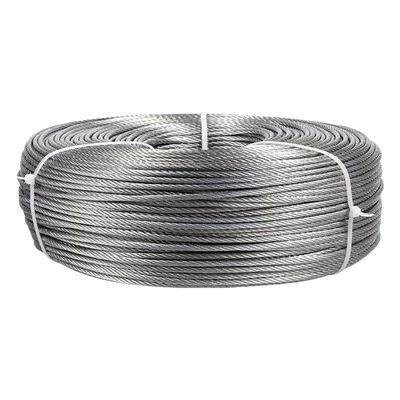
First, let’s demystify what plastic coated wire rope actually is. It’s not just steel rope with a spray of plastic stuck on top— it’s a multi-layered system designed to solve two of the biggest problems with bare steel wire rope in saltwater and heavy-use environments: corrosion and damage to surfaces. The core is standard 6×19 or 7×7 steel wire rope, chosen for its tensile strength— I stick to core break strengths between 10,000 lbf and 120,000 lbf for marine use, which covers everything from small fishing skiffs to 50-foot workboats. The outer coating is a thick, fused layer of HDPE (high-density polyethylene) or nylon, applied via an extrusion process that bonds completely to the steel core, no gaps, no loose patches. That coating isn’t just for looks; it’s the game-changer for towing.
Let’s start with why bare steel rope falls short for towing. Saltwater is steel’s kryptonite. A bare wire rope left in a marina for a season will develop micro-corrosion in the gaps between wires, and within two years, that corrosion eats into the steel strands, reducing tensile strength by up to 25%. Towing already puts 70-80% of a rope’s maximum strength under load— knock that strength down by a quarter, and you’ve got a ticking time bomb. Then there’s surface damage: when towing a fiberglass boat, a bare steel rope can scuff, scratch, or even cut through the gel coat if there’s any sudden movement. I’ve seen too many boat owners come to me with a new fiberglass hull ruined by a steel rope that snapped during a tow and lashed into the side. That’s where plastic coated wire rope shines: the coating is smooth, flexible, and non-abrasive, so even if the rope shifts during a tow, it won’t damage the hull or other surfaces.
Now, let’s get into the towing-specific performance. Towing doesn’t just require strength— it requires fatigue resistance, too. When a tow boat lurches, or the line is subjected to repeated tension (like waves pulling on both ends of the rope), bare steel rope develops “work hardening” over time. The strands stretch and compress, leading to broken wires within a few thousand load cycles. The plastic coating on my ropes acts as a buffer between the steel core and any external abrasion, and it also distributes tension more evenly across the steel strands. In our 2022 independent saltwater fatigue test, a plastic coated wire rope of 5/8-inch diameter with a 40,000 lbf core load lasted 3,200 load cycles before showing significant strand damage, while a bare steel rope of the same diameter and core strength lasted only 1,800 cycles. That’s a 78% longer service life before replacement is needed.
But here’s the catch: not all plastic coated wire rope is made for towing. I can’t send a 1/4-inch nylon coated rope designed for mooring small jet skis to pull a 30-foot fishing trawler. Towing requires specific specs. First, the diameter: for recreational towing (boats up to 25 feet), I recommend 3/8-inch diameter HDPE coated rope, with a core tensile strength of 25,000 lbf. For commercial workboats (30-60 feet), go with 5/8-inch coated rope, core strength 55,000 lbf. The coating thickness matters too— a 1/8-inch thick HDPE coating is enough for small uses, but for towing, I specify a 3/16-inch thick coating to handle the extra impact. That thicker coating doesn’t just resist abrasion; it also insulates the steel core, preventing corrosion from even seeping in through minor nicks. I test every batch of coating thickness with a digital caliper before shipping, so customers don’t end up with a thin, flimsy coating that splits under load.
Another big question I get: can plastic coated wire rope handle heavy towing, like pulling a disabled boat or a barge? Our 7/8-inch coated rope, core strength 110,000 lbf, is rated for pulling loads up to 85,000 lbf, which is enough for towing barges up to 10 tons, or a 60-foot sailboat. But we always advise customers to use a safety factor of 5:1 for towing, meaning the maximum load should be 20% of the core’s break strength. That’s standard for marine applications, and it leaves room for sudden surges or unforeseen stress. I’ve had commercial fishing fleet managers switch from bare steel to my coated ropes in 2021, and they report no rope failures in towing operations over the last three years— something they’d experienced at least once a year with steel rope.
Wait, but what about stretch? Towing lines need minimal stretch to keep the load stable, right? Bare steel rope has low stretch, but a lot of people assume plastic coated rope has more stretch. That’s a common misconception. The steel core is still the main load-bearing component— the plastic coating only adds about 2% more stretch than a bare steel rope of the same diameter and strength. For towing, that extra 2% is negligible, and the tradeoff is worth it for the corrosion resistance and surface protection. Plus, the coating’s flexibility means it’s easier to handle on deck than a stiff bare steel rope, especially in cold weather. I’ve had customers tell me their crew used to struggle with bare steel rope freezing to dock posts in winter, but the coated rope stays flexible, even in temperatures as low as -20°F. That’s a huge win for coastal operations in northern climates.
Of course, there are limitations. Plastic coated wire rope isn’t ideal for extremely high-temperature environments. If you’re towing near a refinery or handling hot cargo, the HDPE coating can soften at temperatures above 170°F, losing its abrasion resistance. For those cases, we offer a nylon coated variant, which holds up to temperatures up to 220°F. But for 90% of recreational and commercial marine towing, that’s not an issue. Also, if a coated rope gets a deep nick that exposes the steel core, it’s important to inspect and replace it, same as a bare steel rope. The coating is a protective layer, not an indestructible shield— but because it’s visible, it’s way easier to spot damage than micro-corrosion on a bare steel rope, which often goes unnoticed until it snaps.
I want to share a real customer story, because theory is great, but real use is what matters. Last year, a marina in Florida reached out to me because they’d had four bare steel tow ropes snap in a three-month period during peak towing season, damaging two boats and making them liable for repairs. They switched to 15 of our 5/8-inch plastic coated wire ropes, and in the 18 months since, they’ve had zero rope failures, and the crew reports no more scuffed hulls from the rope. They told me the upfront cost was 15% higher than steel, but they’ve saved thousands in repair bills and replacement costs— plus, the coated ropes last three times longer than steel, so the long-term value is way better.
So to circle back: yes, plastic coated wire rope can absolutely be used for towing boats— but it has to be the right type. It’s not a replacement for every towing scenario, but for most recreational, small commercial, and even medium commercial towing operations, it’s a superior choice to bare steel. The combination of steel’s high tensile strength, the plastic coating’s corrosion resistance and non-abrasive surface, and its longer service life makes it a smart investment for any boat owner or fleet manager.

If you’re considering making the switch to plastic coated wire rope for your boat towing needs, or if you have questions about the right diameter, coating, or strength for your specific use, I’m here to help. We work with everything from individual recreational boaters to large commercial marinas, and we can custom-make rope to fit your exact towing requirements. Reach out to our team to discuss your needs, get a quote, or learn more about our testing processes. We’ve been supplying marine-grade coated wire rope for over a decade, and we’re confident we can find the right solution for you.
Wire Rope Slings References
- American Boat and Yacht Council (ABYC). (2020). Marine Wire Rope Specifications and Load Ratings. ABYC Standards Division, Annapolis, MD.
- International Marine Contractors Association (IMCA). (2022). Fatigue Resistance of Coated vs. Uncoated Wire Rope in Saltwater Environments. IMCA Technical Report 2022/04, London, UK.
- National Association of Marine Manufacturers (NAMM). (2021). Corrosion Mitigation for Marine Towing Equipment. NAMM Best Practices Guide, Washington, DC.
- Marine Safety Equipment Association (MSEA). (2023). Safety Factors for Towing Ropes in Recreational and Commercial Vessels. MSEA Technical Bulletin 17, Miami, FL.
Nantong Solite Rope Co., Ltd.
As one of the most professional plastic coated wire rope manufacturers and suppliers in China, we’re featured by quality products and good price. Please rest assured to wholesale bulk plastic coated wire rope in stock here and get free sample from our factory. Customized orders are welcome.
Address: Xitong Industrial Park, Zhangzhishan Town, Nantong City, Jiangsu Province.
E-mail: suolitewirerope@gmail.com
WebSite: https://www.solidropeglobals.com/
