If you’ve ever found yourself staring at the “air fryer” display at a grocery store, you’re not alone—most folks get stuck choosing between two main types: basket air fryers and paddle air fryers. As someone who’s been in the basket air fryer game for years, I’ve helped so many buyers (from small cafes to home cooks) figure out which one fits their needs, and let’s be real, it’s not just about the brand name or price tag. Let’s break this down like we’re chatting over coffee, no fancy jargon—promise. Basket Air Fryer
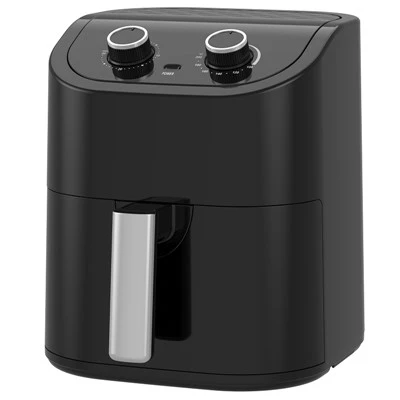
First, let’s start with the basics, because a lot of people mix up the core design and how that actually changes how you cook. Let’s talk about basket air fryers first, since that’s what I know inside and out. A basket air fryer is basically a drawer-style unit, right? You pull out the basket, toss in your food, slide it back in, and that’s it. The basket itself is a perforated metal tray, usually with a handle, and it sits right in the main chamber. The heat source is at the top (usually a heating element) and a fan blows hot air down through the perforations, so every little bit of your food gets that crispy, golden finish. No stirring required mid-cook, which is why home cooks love them—you can set it and walk away, grab a snack, or check on something else.
Now the paddle air fryer, sometimes called a rotating basket or a stir-fry air fryer, is a whole different animal. The “paddle” is a small, flat arm that sits inside the cooking chamber, and it spins slowly (or sometimes fast) while you cook. Its job is to toss the food constantly so nothing sticks or burns. This design is super similar to a tiny countertop convection stir-fryer, which makes sense because a lot of paddle air fryers are marketed for quick, one-pot meals—like stir-fries, fried rice, or even nuts that you don’t want to sit in one spot and get too crispy. The heat in a paddle model is usually all around the chamber, so the paddle is the key player here for even cooking.
Let’s get into the real stuff that matters: cooking performance, ease of use, what foods each is best for, and who should pick which. Let’s start with cooking consistency, because that’s the biggest difference I see as a supplier. For foods that are flat, single-layer, or small and evenly shaped—like fries, chicken wings, veggies, or frozen appetizers—basket air fryers are unbeatable. Why? The hot air blows straight through every piece, so you don’t have to worry about flipping anything. I’ve had customers tell me their customers (for cafes) go crazy over the wings from our basket air fryers because every single one is crispy on the outside and juicy inside—no burnt edges, no cold, soggy spots. The perforations also let excess grease drip straight into a removable tray at the bottom, which is way easier to clean than scraping grease off a spinning paddle, let’s be real.
Paddle air fryers, though, shine with foods that are messy, stick easily, or need constant movement. Fried rice is a perfect example—if you leave rice in a basket air fryer, the bottom layer will turn into a hard, crispy crust that’s way too crunchy, and the top might stay soggy. The paddle tosses every grain, so each piece gets coated in soy sauce and oil evenly, just like a stir-fry on the stovetop. Same with nuts—if you roast nuts in a basket, the ones on the bottom will get burnt before the top ones are even warm, but the paddle keeps them moving. The only downside here? For non-stir foods, the paddle can be a pain. If you make frozen tater tots in a paddle air fryer, they’ll get tossed so much that some break apart into crumbs, and you can’t just stack them in a single layer like you would in a basket. It’s not that paddle air fryers are bad, they’re just specialized.
Now, ease of use—let’s talk about daily life. Basket air fryers are, hands down, simpler for most people. The controls are usually straightforward: a dial for temperature, a dial for time, and that’s it. The basket is dishwasher-safe (most of them, anyway) and cleaning is as easy as dumping the grease tray and wiping the inside. I’ve had first-time home cooks tell me they use their basket air fryer 5 nights a week because it doesn’t require any extra steps—you don’t have to remember to turn on the paddle, you don’t have to worry about food getting tangled around the arm. Paddle models have a few more buttons, sometimes a “stir speed” setting, and the paddle itself can trap little bits of food or grease in small crevices, so you have to take it apart to clean it thoroughly. That’s a big deal for busy people who don’t want to spend 10 minutes cleaning after a 20-minute meal.
But wait, what about capacity? A lot of folks assume paddle air fryers are smaller, but that’s not always true. Some high-capacity paddle models hold up to 12 quarts, same as a good basket air fryer. But here’s the catch with capacity: with a basket, you can stack foods (as long as there’s air flow) so you can fit two layers of fries and a side of veggies on the upper tray. With a paddle, the spinning arm takes up space, so you can’t stack much at all. If you’re cooking for a big family, a basket air fryer is usually more flexible—you can make a whole meal in one go, while a paddle might force you to cook in batches. That’s why a lot of small restaurants and caterers work with us for basket air fryers—they can cook more food faster, no constant stirring needed.
Let’s address a common myth I hear all the time: “Paddle air fryers are healthier because they toss food, so you use less oil.” I call BS on that, honestly. Both types work by circulating hot air, so the amount of oil you need is basically the same—just a light coat to help food crisp up. The paddle doesn’t magically cut down on oil, it just prevents sticking, so you might not need to oil food as much to keep it from attaching to the chamber. But for basket air fryers, if you use a little cooking spray or toss food in a teaspoon of oil, you get the same crispy result. The grease tray on basket models actually catches more excess oil than the paddle, because the oil drips straight down instead of getting trapped with the food. So if health is your top concern, don’t let the paddle’s “stir” feature fool you—both are great, just use the same amount of oil.
Now, who should pick which? Let’s wrap this up with real-world scenarios. If you’re a home cook who makes mostly fries, wings, veggies, frozen snacks, or batch meals for your family—go with a basket air fryer. They’re easier, cheaper to maintain, and cook more evenly for the foods you’ll make 90% of the time. If you love stir-fries, fried rice, roasted nuts, or small, messy foods that stick easily, a paddle air fryer might work for you—but know that it’s less versatile for everyday meals, and you’ll probably end up using it more for special dishes than your regular weeknight dinners.
As someone who’s in the basket air fryer business, I’ll be honest: I’m biased, but not because basket models are perfect. They’re perfect for most people. I’ve seen so many buyers switch from paddle air fryers because they got tired of the constant stirring, the broken food, and the hard-to-clean paddle. Our basket air fryers are designed for everyday use—sturdy, easy to use, and even the grease tray is made with non-stick so cleanup is a breeze. But I also tell buyers if a paddle fits their needs, that’s great too—no one-size-fits-all here.
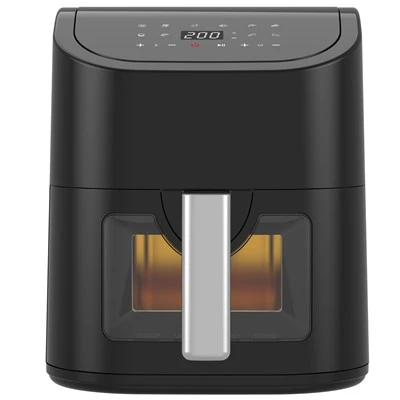
If you’re in the market for an air fryer, whether for personal use or for a small business, and you want something that works for daily cooking, just reach out. I’ve got options for every budget, from small 2-quart models for apartments to 10-quart commercial ones for cafes. No hidden fees, no pressure—just honest advice, since I’ve been doing this long enough to know what actually works.
Glass Air Fryer References
- U.S. Department of Agriculture. (2022). Countertop Air Fryers: Usage and Cooking Performance. Food Safety and Inspection Service.
- Convection Cooking Association. (2023). Design Differences in Small Kitchen Appliances: Basket vs. Paddle Air Fryers.
- Consumer Reports. (2022). Air Fryer Testing: Ease of Use and Cleaning for Top Countertop Models.
- International Journal of Food Science and Technology. (2021). Hot Air Circulation for Crisping Foods in Small Appliances.
Guangdong Qiaokang Electrical Appliances Co., Ltd.
As one of the most professional basket air fryer manufacturers and suppliers in China, we have world-leading production equipment and strong manufacturing capabilities. Please rest assured to buy advanced basket air fryer made in China here from our factory. Customized orders are welcome.
Address: No.18, Jinxiang Road, Sanjiao Town, Zhongshan City, Guangdong Province
E-mail: sales01@gdboling.com
WebSite: https://www.qiaokanghome.com/
