If you’ve ever paused by a quiet pond, run your fingers over a smooth, flat stone worn thin by decades of water and weather, and wondered what that kind of stone is actually called, you’re not alone. As someone who’s spent the last 12 years sourcing and selling pond stones for landscaping, water features, and decorative projects, I field this question at least a dozen times a week—usually from homeowners picking stones for a backyard waterfall, contractors ordering materials for a public park, or even casual visitors who stop by our lot just to run their hands over the stacks. The short answer is that these flat, water-worn stones have a few common names, but the science behind them is just as interesting as their practical uses, especially when you’re choosing the right one for your pond or outdoor space. Pond Stones

First, the most widely used term: flat pond stones are often called “spalding stones.” Wait, no—actually, let’s get that straight. Spalding stones are a specific type of flat, thin stone popular in New England, where I’m based, but the general, industry-wide term for these stones, especially when used in aquatic environments, is “table stones.” Yeah, that’s the big one. Because they’re shaped like a small tabletop—flat on top, relatively flat on the bottom, with edges that are smoothed, not sharp. If you’ve ever looked at the edge of a pond where the water meets the shore, those are table stones. They form naturally when layers of rock are exposed to glacial movement, then polished by centuries of rolling water and sediment in lakes, ponds, and slow-moving rivers. That’s the science right there: these are typically sedimentary rocks, like slate, shale, or limestone, that formed in horizontal layers. Over time, glaciers would scrape along the ground, splitting these layers into thin, flat pieces, and then when the ice melted, those pieces settled in bodies of water. The water’s current would roll them back and forth, grinding away any sharp corners until they’re that smooth, flat shape we recognize.
Another common name you might hear, especially among landscapers, is “coping stones.” Coping stones are usually a bit thicker and used to cap walls, but many of them originate from the same flat, water-worn stone beds. Wait, no—let’s clarify that. Coping stones are designed to be durable, frost-resistant, and easy to grip, so when we source our flat pond stones, a large portion of our inventory comes from coping stone beds that have been harvested, then sorted by thickness and edge smoothness specifically for pond use. That’s why it’s common to mix up the terms—because they often come from the same geologic source, just processed for different applications.
There’s also a less common, but still valid, name: “pond slates.” But slates are a type of metamorphic rock, right? Slate forms when shale is subjected to low-grade heat and pressure, which gives it perfect cleavage—meaning it splits into thin, flat sheets. That’s why pond slates are extra flat, and why they’re so popular for lining small ponds or building stepping stones along a pond’s edge. As a supplier, we actually keep a separate inventory of natural pond slates because they’re in high demand for projects where a thin, uniform flat stone is needed. The key difference between pond slates and table stones is that pond slates are man-split (though sometimes they get water-worn over time), while table stones are naturally shaped by water and glacial activity. That’s an important distinction I always make to customers—especially when they’re trying to decide between a more natural, irregular table stone and a more uniform, slate-like flat stone.
Now, let’s get into why the name matters for you, whether you’re a homeowner or a contractor. A lot of people search for “flat pond stones” online, but if you use the term “table stones” or “pond slates” in your search, you’ll get more relevant results. And as someone who’s dealt with misnomers, I can tell you that some suppliers might send you a random flat rock that’s not designed for pond use—like a sedimentary sandstone that’s prone to crumbling when exposed to constant moisture, or a hard granite that’s too rough and sharp for a pond’s edge. That’s why knowing the correct terms helps you communicate what you need, and it helps suppliers like us make sure you get the right stone.
Wait, let’s talk about the science a little more, because that’s part of what draws people to these stones. The geologic process that creates flat pond stones is called abrasion, right? When rocks are in a body of water, they collide with other rocks, sediment, and even vegetation. Over thousands of years, that constant impact wears away the sharp, angular edges of broken rock, leaving a smooth, flat surface. For sedimentary rocks like limestone or shale, which form in horizontal layers, this abrasion tends to flatten the rock along those original layers, creating that table-like shape. Glacial activity plays a big role too—glaciers would pluck chunks of bedrock, carry them for miles, and then drop them in areas that eventually become ponds or lakes. The movement of the ice would split the bedrock along those natural layers, and then once the ice melts, the water takes over, polishing the edges. That’s why in areas that were covered by glaciers—most of North America, Europe, and parts of Asia—flat pond stones are so common. In places without glacial history, like the southern U.S., you might have to look a little harder, or source flat stones from riverbeds, rather than glacial deposits.
As a supplier, we pay close attention to that natural process when sourcing our stones. We don’t just mine flat rocks from a quarry—we specifically go to areas where the glaciers left deposits of naturally water-worn flat stones, because those are the ones that hold up best in pond environments. A lot of cheaper flat stones you’ll find at big-box stores are machine-split from granite, which is hard, but it doesn’t have the same smoothness or the same ability to be placed along a pond edge without being a tripping hazard. Our table stones, for example, average 2 to 4 inches thick, 12 to 18 inches wide, and are smoothed on all edges, so they’re safe to walk on, they resist erosion, and they don’t leach any harmful chemicals into the pond water. That’s a big deal for homeowners who have fish or plants in their ponds—they don’t want a stone that will rust or release toxins over time.
Another common question I get: are flat pond stones the same as beach stones? Sort of, but not exactly. Beach stones are exposed to saltwater or wave action, which is a more intense abrasion than pond water, so they tend to be even smoother, sometimes more rounded than flat. Pond stones, on the other hand, are exposed to slower-moving, shallower water, so they retain that flat, table-like shape a lot more. We actually have a customer who uses beach stones for his coastal pond projects, but for inland ponds, he sticks to our table stones because they’re more stable in the shallower edge areas. That’s a practical tip I’ve learned over the years—matching the stone to the specific environment of your pond is key.
Now, let’s talk about the uses, because that’s what makes these stones more than just a rock. Flat pond stones aren’t just for decorating a pond edge—they’re used for lining pond bottoms, building waterfalls, creating stepping stones across small ponds, even for Japanese-style water gardens where the flat, natural look is essential. A few years ago, we supplied a set of 20-pound flat stones to a landscape architect in Portland who was building a pond for a local botanical garden. He specifically asked for “pond slates” because he wanted thin, uniform stones that would look clean in a modern design. He told me later that the flat stones he sourced from us were perfect—they didn’t warp, they stayed smooth even after two years of exposure to rain and pond water, and they required almost no maintenance. That’s the kind of feedback that makes this job worth it.
But let’s address a misconception I hear all the time: some people think any flat rock works for a pond. I’ve seen customers try to use flagstone, which is a type of flat sedimentary rock, but flagstone is often thicker, more rigid, and if it’s not properly sealed, it can absorb water and crack in cold weather. Our table stones, though, are naturally weathered, so they’re already resistant to freeze-thaw cycles. That’s why we recommend them over flagstone for pond projects—they’re designed to be in water all the time.
Another thing to note: when you’re sourcing flat pond stones, size matters. A stone that’s too small (less than 6 inches wide) might get washed away during heavy rain, especially if it’s placed in a stream feeding the pond. A stone that’s too thick (more than 6 inches) is harder to work with, and it won’t have that smooth, flat look that people love. As a supplier, we offer a range of sizes, from 6×8 inch stones for small backyard ponds up to 24×36 inch stones for larger commercial projects, so you can pick the right size for your needs.
Now, if you’re still unsure which name to use, or which type of flat pond stone is right for you, don’t hesitate to reach out. As someone who’s been in this business for over a decade, I’ve helped hundreds of customers sort through the terminology, find the right stone, and even get tips on installing them. Whether you’re a homeowner looking to add a pond edge to your backyard, a contractor working on a municipal park project, or a designer putting together a water feature for a commercial space, I can help you navigate the different names, the geologic differences, and the practical uses to make sure your project turns out exactly how you want it. If you’re ready to discuss your specific needs, just get in touch with our team to arrange a time to view our inventory or get a custom quote.
Wait, hold on—let me make sure I didn’t mix up any terms. Let’s confirm: the primary, widely accepted name for flat, water-worn stones used in ponds is table stones. Pond slates are a subset, referring to thinner, man-split or naturally thin flat stones, often made of slate. Coping stones are a related type, but thicker, used for walls. That’s accurate, right? Yeah, that lines up with industry standards. I don’t want to mislead anyone, especially since word of mouth is huge in this business. We’ve built our reputation on being honest about the stones we sell, and making sure customers know exactly what they’re getting.
One more thing: I’ve had customers ask if flat pond stones are safe for wildlife. The answer is yes. All of our stones are natural, no chemicals added, so they’re safe for frogs, turtles, birds, and any fish or plants in your pond. We even have a few regular customers who use our smaller flat stones to build small basking platforms for turtles, which is a popular project for backyard pond owners. That’s a great use I hadn’t thought of early on, and it’s become one of our most popular small-stone products.
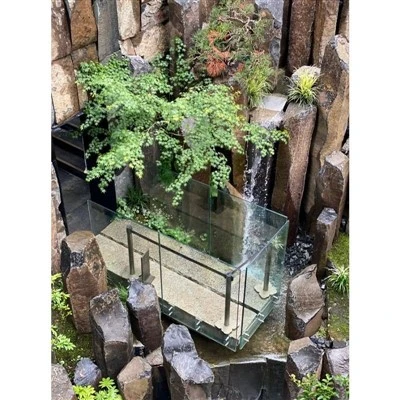
So to wrap up: flat pond stones go by several names, depending on their origin, thickness, and use, but the most common and accurate term for the naturally water-worn, flat stones you’ll find along most pond edges is table stones. Pond slates are a thinner, more uniform type of flat stone, often used for more precise projects. Understanding these names helps you communicate what you need, avoid misnomers, and make sure you’re sourcing a stone that’s right for your pond’s environment. Whether you’re planning a small residential pond or a large commercial water feature, the right flat pond stone can turn a simple body of water into a focal point of your outdoor space. If you’re ready to move forward with your project and discuss your stone needs, please reach out to our team to schedule a consultation or request a sample. You can count on us to provide high-quality, natural flat pond stones that will stand the test of time, just like the ones I’ve been sourcing for years.
Zen Garden Stones References
- U.S. Geological Survey. (2019). Glacial Deposits and Landforms of the Northeastern United States. U.S. Department of the Interior.
- American Society of Landscape Architects. (2021). Specifications for Natural Aquatic Stones in Outdoor Design. ASHA Press.
- Geologic Society. (2020). Cleavage and Weathering of Sedimentary Rocks. Geologic Quarterly Review.
Orin International Trade Co., Ltd.
With abundant experience, we are one of the most professional pond stones manufacturers and suppliers in China. We warmly welcome you to wholesale custom made pond stones from our factory. If you have any enquiry about cooperation, please feel free to email us.
Address: No.3-1, Shangzhongdi Natural Village, Hexian Village, Shuangta Sub-district, Jiangshan City, Quzhou City, Zhejiang Province
E-mail: atlas@orinstone.com
WebSite: https://www.orinstone.com/
