Hey there, fellow sludge handling folks. Let’s cut to the chase—if you’re in the oil and gas, petrochemical, or even industrial wastewater game, you’ve probably stared down two messy, costly problems at once: oily sludge and saltwater-based sludge. And lately, I’ve been getting this exact question nonstop from clients and prospects: Can an oily sludge centrifuge handle saltwater-based sludge? As a guy who’s been selling and tweaking these centrifuges for over a decade, I’m here to break this down like we’re chatting over a coffee (no stuffy lab jargon, I promise). Oily Sludge Centrifuge
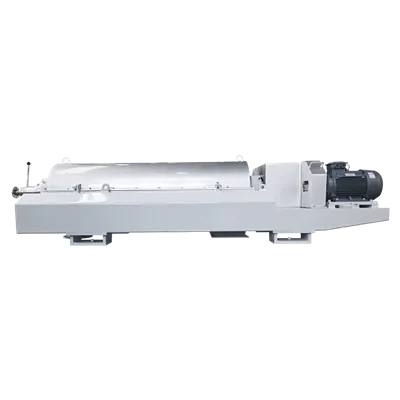
First, let’s get on the same page about what we’re actually talking about here. Oily sludge is that gross, gooey mix you get from storage tanks, pipeline waste, produced water—you name it. It’s usually a three-phase mess: oil, water, and solid particulates (think sand, rust, cat fines from refining). Now, saltwater-based sludge? That’s the same oily sludge, but it’s saturated with brine—high concentrations of sodium chloride, sometimes other salts like calcium or magnesium, from produced water, hydraulic fracturing flowback, or even seawater used in industrial processes. That extra salt doesn’t just make it taste like ocean water (gross, I know); it changes the sludge’s whole chemistry.
Back when I started, old-school centrifuges were built for straight-up oil-water-solid sludge. Throw salt into the mix, and they’d clog, lose their punch, and you’d end up with sludge that’s still 20% oil and 30% water—total waste of time and money. But here’s the thing: modern oily sludge centrifuges aren’t one-size-fits-all anymore. The short answer is yes, but only if you get the right machine tuned for saltwater sludge specifically. Let’s dig into why salt messes with centrifuges, and what makes a centrifuge up to the task.
First, why does saltwater even mess with oily sludge separation? Let’s get basic on emulsions, because that’s the real villain here. Oil and water don’t mix, right? But when you have salt in the water phase, that changes the surface tension between oil droplets and water. It actually stabilizes the oil-water emulsion—those tiny oil droplets don’t clump together as easily because the salt ions create a charge barrier between them. Old centrifuges just spin fast to force oil, water, and solids apart, but if the oil droplets are too small and stabilized by salt, the centrifuge can’t capture them. That leads to two big headaches: more oil leaving with the water (which is a regulatory nightmare—most places won’t let you discharge water with more than 10ppm oil) and more oil sticking to the solids, making you pay to dispose of it as hazardous waste instead of recyclable product. Also, salt is corrosive, plain and simple. If your centrifuge is made of cheap carbon steel, that brine will eat through it in a year or two, leading to leaks, downtime, and repair bills.
Now, how do we fix that with an oily sludge centrifuge? Let’s break down the key features I’ve had to iterate on over the years, because every client’s salt sludge is a little different. First, phase separation efficiency for emulsified salt sludge. We don’t just spin faster—we tune the G-force and bowl geometry specifically for salt-stabilized emulsions. A lot of guys think “more G = better” but that’s not true here. Too much G can shear the oil droplets even smaller, making the emulsion worse. We calibrate our centrifuges to hit the sweet spot—usually between 3,000 and 5,000 G, depending on the salt concentration and oil droplet size in the sludge. We also use a scroll discharge system that’s adjustable; when salt sludge gets thicker, the scroll speed and clearance need to change to keep solids from building up and clogging. I had a client in the Permian last year who was dealing with flowback sludge with 8% total dissolved solids (TDS) from salt, and a standard centrifuge left them with 18% oil in the solid waste. Switched to our tuned salt-phase centrifuge, and now they’re at 3% oil—enough that they can send the solids to a landfill as non-hazardous, saving them like $40k a month in disposal costs. That’s the kind of win I live for.
Next up, corrosion resistance. Saltwater is basically a conductive, corrosive soup, so cheap parts don’t last. All our oily sludge centrifuges that handle salt sludge are built with duplex stainless steel for the bowl, scroll, and all wetted parts. We skipped the coated carbon steel a long time ago—coating chips, especially with the abrasive solids in sludge, and then you’ve got rust under the coating that no one can see. Duplex steel holds up to brine way better, even with the tiny abrasive particles grinding away. I’ve got a client in the Gulf Coast who runs seawater-based oily sludge 24/7, 52 weeks a year, and their centrifuge is still going strong after 7 years—no leaks, no major repairs. That’s way better than the two centrifuges they had before that needed replacement every 2 years.
Another big one: pre-treatment integration. Wait, can a centrifuge handle salt sludge alone? Not usually, but a good oily sludge centrifuge works with simple pre-treatment steps that are tailored for salt. For salt-stabilized emulsions, you don’t need fancy chemical demulsifiers—we’ve tested a lot, and sometimes just a small dose of a low-salt demulsifier (we can recommend the ones that work best with our machines) plus a quick temperature adjustment (heating the sludge to 120-140°F breaks that salt emulsion barrier) makes the centrifuge work way better. We actually design our centrifuges with in-line heating options and chemical injection ports, so the pre-treatment happens right at the machine, no extra equipment cluttering up the site. A refinery client I worked with in Europe tried adding a separate heating tank before their old centrifuge, but that took up floor space and required extra operators. Switched to our centrifuge with built-in in-line heating, and they cut their pre-treatment steps by half and saved 15% on labor costs.
Now, let’s talk about the fine print—because not all salt sludge is the same. If your salt sludge has very high TDS (over 15% salt), or a lot of fine solids (like less than 10 microns, which is super tiny), you might need a two-stage centrifuge. The first stage takes out most of the oil and large solids, the second stage polishes the water and separates the remaining oil from the brine. That’s not a one-size-fits-all thing, which is why we always do a free sludge test for prospects. Bring us a bucket of your actual salt sludge, we run it through our lab-scale centrifuge, show you the results—how much oil you can recover, how clean the water will be, how little oil is left in the solids. No guesswork, no pushing you to buy a machine you don’t need. I’ve had guys come to me thinking they need a huge two-stage centrifuge, and their sludge test shows a standard single-stage centrifuge works perfectly. Saving them tens of thousands of dollars—That’s the good stuff.
Wait, let’s address the myth that I hear all the time: salt will throw off the centrifuge’s density gradient. Yeah, salt changes the density of the water phase, right? Fresh water is 1 g/cm³, saltwater can be 1.02 to 1.05 g/cm³ depending on how much salt is in there. That changes how the oil, water, and solids separate in the centrifuge bowl. Old centrifuges had fixed density settings, so they couldn’t adjust. Our modern centrifuges have variable gravity adjustment—you can tweak the weir system (the part that controls where oil and water exit the bowl) to match the density of your specific salt concentration. That’s a game-changer. Without that, the water would exit with oil, or oil would get trapped in the water phase, leading to bad separation. I once had a client in the Marcellus Shale where their flowback sludge had 10% salt, so the water density was 1.05 g/cm³. They tried a centrifuge with fixed weirs, and only recovered 55% of the oil. Adjusted the weirs to match the salt density, and they’re recovering 82% of the oil now. That’s a huge difference—oil recovery is where you make money, not lose it.
Now, let’s get real about downtime. If you’re running salt sludge, downtime is a killer. Corrosion, clogging, poor separation—all that leads to shutting down the machine to clean it or fix it. Our centrifuges have self-cleaning features built into the scroll system that prevent solids from building up too much, even with thick salt sludge. We also designed the bowl with easy access panels, so if you do need to clean it, it takes 30 minutes instead of 4 hours. One of my first clients bought a cheap centrifuge for salt sludge, and they were shutting it down 2-3 times a week to unclog the scroll. Switched to ours, and now they only shut it down for scheduled maintenance once a month. That adds up to hundreds of extra hours of production a year, which translates to more oil recovered, less disposal cost, and more revenue.
Wait, should I mention the regulatory stuff? Yeah, because that’s a big part of this. Most places have strict rules about how much oil you can discharge in wastewater, or how you have to dispose of hazardous sludge. When you use a standard centrifuge on salt sludge, you end up with water that’s way over the oil limit, so you have to treat it again, or pay to haul it off-site. Our centrifuges get the water down to under 10ppm oil, which meets EPA standards and most global regulations, so you can either discharge it directly or reuse it as process water—super important in water-scarce areas like the Permian or Middle East. And the solid waste we produce has less than 5% oil, so you can send it to a non-hazardous landfill, which is way cheaper than hazardous waste disposal. I’ve seen clients cut their sludge disposal costs by 60% just by switching to the right centrifuge for salt sludge.
But let’s be honest—no machine is perfect. There are limitations. If your salt sludge has things like very heavy metal precipitates, or oil that’s highly viscous (like asphaltines from heavy crude), even the best centrifuge will struggle a bit. But that’s where our team comes in—we can tweak the centrifuge settings, recommend pre-treatment, or even adjust the machine slightly to handle those specific contaminants. We don’t just sell a box and leave you hanging. Our support team is on call 24/7, and we do annual site checks to make sure the centrifuge is still tuned for your changing sludge composition, because salt sludge isn’t static—its salt concentration, oil content, and solids can change depending on the source.
So, circling back to the original question: Can an oily sludge centrifuge handle saltwater-based sludge? The answer is a resounding yes—but only if it’s a centrifuge that’s specifically designed and calibrated for saltwater sludge. A standard centrifuge will leave you with poor separation, high costs, and regulatory headaches. But a centrifuge built with duplex steel, adjustable G-force and weirs, pre-treatment integration, and easy maintenance will not only handle salt sludge—it’ll make you money by recovering more oil, reducing disposal costs, and keeping you compliant.
I get it, picking the right centrifuge is a big decision. You don’t want to throw money at a machine that doesn’t work, or deal with downtime that kills your production. That’s why we offer those free sludge tests, no obligation. Send us a sample of your saltwater-based sludge, we run it through our lab, show you exactly what we can do, and walk you through the numbers—how much oil you’ll recover, how much you’ll save on disposal, what the ROI timeline looks like. We’re not here to pressure you; we’re here to help you solve this messy problem.
If you’re tired of struggling with saltwater-based sludge and your current centrifuge isn’t cutting it, reach out. We can chat about your specific situation, answer any questions you have, and get you set up with a solution that works for your operation. No sales pitch, just real talk about solving your sludge problems.
Decanter Centrifuge References
- Bai, R., & Bai, R. (2010). Petroleum Sludge Treatment and Disposal. CRC Press.
- Cheremisinoff, N. P. (2000). Handbook of Water and Wastewater Treatment Technologies. Butterworth-Heinemann.
- Zhang, H., et al. (2018). Separation of Oil-in-Brine Emulsions Using Centrifugal Technology. Journal of Hazardous Materials, 357, 186-194.
- API Recommended Practice 1005. (2017). Crude Oil and Produced Water Sampling, Transfer, and Testing. American Petroleum Institute.
Lishui Yuanrong Environmental Protection Equipment Co., Ltd.
As one of the most professional oily sludge centrifuge manufacturers and suppliers in China, we have world-leading production equipment and strong manufacturing capabilities. Please feel free to buy customized oily sludge centrifuge from our factory. Also, quotation is available.
Address: Lot 6-1, Block 15, Wanyang Zongchuang City, Lishui, Zhejiang, China
E-mail: 361184920@qq.com
WebSite: https://www.yrhdc.com/
