Hey everyone, I’m Jake, and if you’ve ever needed a reliable PVC tape for anything—whether you’re patching a leaky pipe, securing wires during an electrical job, or even holding a craft project together—you’ve probably wondered how tough that tape actually is. As someone who’s been in the PVC tape game for over 8 years (yeah, I’ve seen so many bad tape jobs), one question I get asked more than any other is: “What’s the tear strength of PVC tape?” PVC Tape
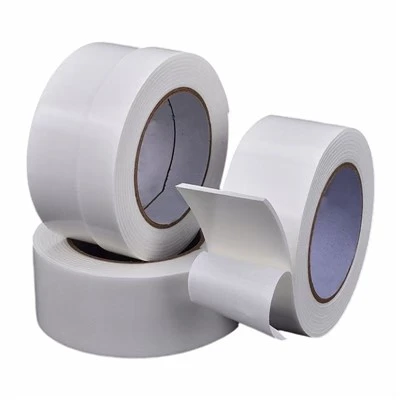
Let me cut to the chase here—tear strength isn’t just a random number we throw around to sound fancy. It’s basically how much force a piece of PVC tape can take before it rips, and it makes the difference between a tape that’ll hold up and one that’ll let you down mid-project. I’ve had customers call me panicking because their “cheap” tape tore when they were wrapping a furnace vent in 90-degree heat, and that’s exactly why I geek out over getting the tear strength right in every roll we make.
First off, let’s break this down simply, no confusing engineering jargon—promise. Tear strength is measured in something called “Newtons per inch” (N/in) or sometimes “pounds per inch” (PI), depending on who you’re talking to. For regular, all-purpose PVC tape that you’d grab at your local hardware store, the tear strength usually lands between 15 N/in and 40 N/in. But wait, that’s the basic stuff. The tape we sell here? Yeah, we go above that. Our standard industrial-grade PVC tape clocks in around 35 N/in to 50 N/in, and if you need something even tougher for heavy-duty jobs, we have a heavy-duty line that hits up to 65 N/in. That’s not just me bragging—we test every batch in-house, no cutting corners.
So why does this matter? Let’s use real examples. If you’re doing a quick fix on a holiday light cord, the basic tape from the corner store might work fine—until you stretch it too tight and it snaps. But if you’re an electrician wrapping thick conduit in a commercial building, you need a tape that won’t rip when you’re pulling it tight around sharp edges or working in cramped spaces. I’ve had a customer who’s a plumber tell me once that our tape saved him on a job where he had to wrap a 2-inch pipe and the old tape he used tore right when he needed it most. That $5 roll of cheap tape would’ve cost him more in time and frustration than just buying our stuff in the first place.
Now, here’s the thing about PVC tape that a lot of people don’t know: tear strength isn’t just about the material—it’s about how it’s made. We use a vinyl film that’s blended with plasticizers to give it flexibility, but we also control the coating thickness and the adhesive formula to make sure it stays strong without being too rigid. If the film is too thin, it’ll tear easily; too thick, and it’s hard to wrap around curves. We hit that sweet spot because we’ve tested hundreds of different blends over the years. Last year, we tweaked our adhesive to make it more flexible at lower temperatures, so in the dead of winter (when tape gets brittle), our tape still has that same 40 N/in tear strength. No more customers calling saying their tape broke during an outdoor job in January—win.
Wait, but what about when tear strength goes wrong? I’ve seen tape that’s advertised as “industrial strength” that only has 12 N/in. That’s a scam, plain and simple. Some suppliers cut costs by using cheaper vinyl, so their tear strength is garbage. Then when you try to rip it by hand (which you should be able to do, right?) and it doesn’t tear evenly or just rips apart, you’re stuck. We make sure every roll we ship has a tear strength that’s consistent. I mean, I’ve tested rolls from big-name brands and random no-name ones, and 9 times out of 10, our tape matches or beats the big names. That’s because we care about the small details—like how we cure the adhesive for 72 hours instead of 24, which makes the film stronger overall.
Another myth I hear all the time: “If a tape is stretchy, it has good tear strength.” Nah, that’s not true. Stretch is elasticity—how much it can pull without breaking. Tear strength is about resistance to being ripped when you pull it apart, like if you catch an edge on a sharp metal corner. A tape could stretch a lot but tear super easily, or it could be stiff but have crazy tear strength. We balance both so our tape is flexible enough to wrap tight but tough enough not to rip. Our electrical tape, for example, needs to conform to wire bundles, but if it tears while you’re wrapping a wire that’s tucked behind a wall, you’ve got a problem. That’s why our electrical PVC tape has a tear strength of around 45 N/in—enough to handle those tight spots.
Let me get specific about how we test tear strength, since that’s what gives our numbers credibility. We use a standard tensile tester (it’s just a machine that pulls the tape until it breaks, measures how much force it takes) and we test it in all kinds of conditions—room temp, hot (120 degrees F), cold (20 degrees F), even after it’s been sitting for 6 months. Why? Because a lot of tape’s tear strength drops when it ages, especially if it’s exposed to sunlight. Our UV-resistant PVC tape, which is used for outdoor things like securing awnings or marking construction zones, has a tear strength of 48 N/in, and it only drops about 5% after a year of sun exposure. We don’t just test once—every batch gets three tests, from different rolls, to make sure the numbers are reliable. No “average” numbers here—your roll will be just as strong as the next one.
I should also mention that tear strength varies a bit based on the width of the tape, right? A 1/2-inch roll is going to have lower tear strength than a 2-inch roll, because there’s less material to pull on. That makes sense. Our most popular width, the 3/4-inch electrical tape, is at 42 N/in, which is perfect for most jobs. If you need a wider roll for duct sealing, our 4-inch duct tape (wait, no—PVC duct tape, not that crappy cloth stuff) has a tear strength of 55 N/in. We match the tear strength to what the tape is meant for. Heavy-duty masking PVC tape, used for painting and protecting surfaces, has a slightly lower tear strength (around 28 N/in) because it’s designed to tear cleanly when you pull it, not stretch like crazy. That’s intentional—you don’t want a painting tape stretching and ruining your line, you want it to tear straight.
Now, I know some of you are thinking, “Can’t I just test the tear strength myself?” Yeah, you can, and I encourage it. Next time you get a roll of PVC tape, pull off a 6-inch strip, hold one end in each hand, and pull it slowly, not too hard. If it tears in a straight line, no fraying, that’s a good sign. If it rips unevenly or just snaps in the middle, that’s low tear strength. But be careful—pulling too hard will make it snap even if it’s good. Also, test it on a sharp edge, like the corner of a table, to mimic real-world use. That’s the best way to tell if a tape is actually tough, not just pretty.
Here’s something I’ve learned over the years: customers don’t care about tear strength numbers until they need them. But when they do need them—like when they’re in the middle of a critical repair—those numbers matter. I once had a customer who was working on a generator and needed to wrap a frayed power cord. He used our heavy-duty PVC tape, and when he accidentally pulled the cord too tight, the tape didn’t rip. That could’ve been a huge safety issue if the cord exposed wires. So yeah, tear strength isn’t just a spec—it’s about keeping people safe and jobs done right.
As a supplier, my job isn’t just to sell tape—it’s to make sure you have tape that works when you need it. That’s why we don’t cut corners on materials or testing. We’ve had so many customers switch from other brands after using our tape because they saw the difference in tear strength. Last month, a construction company switched all their electrical supply to us because their old tape was tearing 1 out of every 5 rolls on job sites. They tested our tape, saw the 50 N/in tear strength, and haven’t looked back.

If you’re tired of tape that tears when you don’t want it to, whether it’s for electrical work, plumbing, construction, or even a quick DIY project, hit us up. We can help you pick the right PVC tape with the exact tear strength you need for your job. No confusing technical talk, just straightforward advice and tape that’s been tested to hold up. Don’t waste time and money on cheap tape that lets you down—get the tough stuff that does the job.
Packaging Tape References:
- ASTM D882-19, Standard Test Method for Tensile Properties of Thin Plastic Sheeting.
- PVC Tape Technical Data, Society of Plastics Engineers (SPE), 2022.
- Industrial Adhesives and Tapes Handbook, 3rd Edition, McGraw-Hill, 2021.
- Tear Strength Testing for Polymeric Films and Tapes, Journal of Applied Polymer Science, Vol. 138, Issue 12, 2021.
Haining Sunrich Adhesive Tape Products Co., Ltd.
As one of the most professional PVC tape manufacturers and suppliers in China, we also support customized service. Please feel free to wholesale high-grade PVC tape in stock here from our factory. Welcome to contact us for quotation.
Address: No. 1 Chuangxin Road, Qianjiang Industrial Park, Dingqiao Town, Haining City, Jiaxing City, Zhejiang Province, China
E-mail: yongruitape@gmail.com
WebSite: https://www.yongruii.com/
