If you’ve ever worked in a specialized industry—say, precision aerospace component machining, custom agricultural irrigation system fabrication, or medical device prototyping—you’ve likely encountered a quiet, universal frustration: the expensive, one-of-a-kind piece of equipment you invested in three years ago can’t keep up with today’s workload demands, regulatory updates, or process improvements. For suppliers like us, who build “Other Customized Equipment”—the broad, catch-all category for tools that don’t fit into standard manufacturing, construction, or technology line items, but instead are engineered to solve a customer’s unique, niche problem—this question comes up in nearly every initial conversation: Can my equipment’s functions actually be upgraded, or did I just waste six figures on a disposable solution? Other Customized Equipment

The short answer is: Most of the time, yes, it can. But that doesn’t mean every upgrade is a simple plug-and-play. Over the 12 years we’ve been building customized equipment for clients ranging from small-town specialty food producers to global semiconductor research labs, we’ve learned that the key to a successful upgrade lies in three things: how we design the original equipment, how we frame the customer’s long-term needs at the outset, and how we adapt to evolving industry standards without forcing a full equipment replacement.
Let’s start with the design phase, because this is where the foundation for upgradeability is set. When a customer first approaches us with a request for a custom machine—for example, a unique cartoner for their line of artisanal frozen pops, or a test chamber that simulates extreme high-altitude conditions for their drone parts—too many off-the-shelf equipment builders cut corners on modularity to lower initial costs. They use proprietary circuit boards that can only run the one function the customer asked for, weld structural components that can’t accommodate extra tooling bays, or program software that locks out third-party add-ons. That’s a mistake. We make a point of building every piece of our customized equipment with “future-proofing” baked in, even when the customer is focused solely on delivering the first working unit. For instance, if we’re building a custom packaging line for a customer who currently runs 50 units per hour, we’ll design the frame to support a motor that can handle up to 200 units per hour, and leave empty slots on the control panel for future sensors that track line speed or product temperature. That initial extra design work adds about 7% to the original build cost, but it cuts the cost of future upgrades by 60% or more. We’ve seen clients skip that step, then have to throw out an $80,000 machine because a new regulation required a safety sensor that couldn’t be retrofitted. For them, that initial 7% extra was a bargain.
Next, it’s important to distinguish between the two main types of upgrades our clients come to us for: functional upgrades that expand what the equipment can do, and compliance upgrades that update it to meet new rules or standards. Functional upgrades are often the most exciting for customers. Last year, we worked with a small specialty herb farm that had purchased a custom seedling tray filler from us in 2021. At the time, they only grew four types of basil, so the machine was calibrated to fill trays with four seed varieties. By 2023, they’d expanded to 12 herb types, and their existing machine couldn’t switch between varieties without a two-hour setup. Instead of building them a whole new machine, we retrofitted the filler with a modular hopper system that lets them swap seed bins in 10 minutes, and added a touchscreen interface that stores calibration settings for each herb. The total cost? A quarter of what a new machine would have cost, and it was up and running in three days—no downtime for their growing season. That’s the sweet spot of equipment upgrades: leveraging existing hardware to extend a machine’s life without the shock of a large capital expenditure.
Compliance upgrades, meanwhile, are more technical, but no less critical. Take the medical device industry, for example. A client of ours builds custom implantable medical devices, and three years ago, they had a custom sterilization washer for their product components. In 2022, the FDA updated its regulations for medical device cleaning processes, requiring real-time tracking of rinse water temperature and pressure, plus digital logs that can be accessed for audits. Their original machine had a manual gauge that operators read and wrote down by hand, so it couldn’t meet the new rules. Instead of replacing the washer, we installed a set of temperature and pressure sensors, integrated a simple cloud-based logging system, and reconfigured the machine’s control software to auto-generate audit reports. The upgrade cost about 30% of a new sterilization washer, and the client stayed compliant without pausing production to install a whole new system.
Of course, there are limits to what can be upgraded. We won’t sell a customer on an upgrade if it doesn’t make financial sense. For example, a client recently came to us with a 15-year-old custom metal stamping press they’d bought from another supplier. The machine was built with a single, solid frame that couldn’t support the additional tooling they needed to run a new part. The original builder had used non-standard parts that were impossible to source, so even if we wanted to upgrade it, the cost would have been nearly equal to building a new press. In cases like that, we’re transparent with our customers: sometimes, the right choice is to replace, not upgrade. But that’s a conversation we have early on, before a customer invests in a retrofit that won’t deliver the return they expect.
Another common misconception is that upgrading custom equipment is only for large companies. We work with dozens of small, family-owned businesses every year, and upgrades are often the difference between staying in business and closing their doors. Last year, a small craft brewery in the Midwest came to us with a custom canning line they’d purchased from a builder who went out of business two years prior. They needed to switch from 12-ounce cans to 16-ounce cans, but the original line’s conveyor system was too short to accommodate the larger cans, and the labeling software couldn’t adjust to the new can size. The original builder was long gone, so no one would help them. We redesigned a 10-foot section of the conveyor, replaced the labeling software with a modular system that works with most standard can sizes, and trained their operators on how to adjust settings for different can types. The upgrade cost them less than a third of what a new canning line would have cost, and they’ve since expanded their distribution to 12 states—all because we didn’t tell them they needed to start over.
For our business as a supplier, offering upgradeable custom equipment isn’t just a service—it’s a core part of our value proposition. Too many equipment builders see a sale as a one-time transaction, but we see it as a long-term partnership. When a customer comes back to us for an upgrade, that builds trust, and it often leads to larger projects down the line. We also keep a library of spare parts and software versions for every piece of equipment we build, even from 10 years ago. That means when a customer needs a replacement part or a software update, we don’t have to hunt for obscure components or charge exorbitant fees. It also means we can test upgrades on a prototype before installing them on a customer’s machine, reducing the risk of downtime.
There is, however, one factor that can make or break an upgrade: clear communication between the customer and the supplier, both at the time of the original build and when planning the upgrade. When a customer first approaches us, we ask a lot of questions: What do you want to do with this equipment in five years? Ten years? What regulations do you expect to face in your industry? Are there products you plan to add to your line that this machine will need to handle? We don’t just build what they ask for right now—we build what they’ll need in the future. For example, when we built a custom mixing tank for a natural skincare company last year, we asked if they planned to add exfoliants with larger particles down the line. They said yes, so we installed a variable-speed impeller that can handle coarse ingredients, instead of the standard impeller that would only work with fine lotions. That small extra step is what turned a $45,000 build into a machine that can be upgraded in the future without major modifications.
We also make a point to be transparent about the costs and timelines of upgrades. A lot of customers assume upgrades are fast and cheap, but that’s not always the case. If a machine’s control system is outdated, replacing the software might take a week of testing to make sure it works with all the existing components. If the structural frame needs to be modified, that might require custom machining, which adds a few days to the timeline. We share all that upfront, so a customer can plan around production schedules and budget accordingly. No one likes unexpected costs, especially when those costs come during a busy season.
At the end of the day, the question “Can the functions of other customized equipment be upgraded?” comes down to design intent, supplier expertise, and clear communication. It’s not a yes or no answer—it’s a “sometimes, but only if you plan for it.” For our customers, that means avoiding builders who cut corners on modularity, and choosing suppliers who treat their equipment as a long-term investment, not a disposable purchase. For us, it means continuing to build equipment that can grow with our customers, instead of forcing them to start over when their needs change.
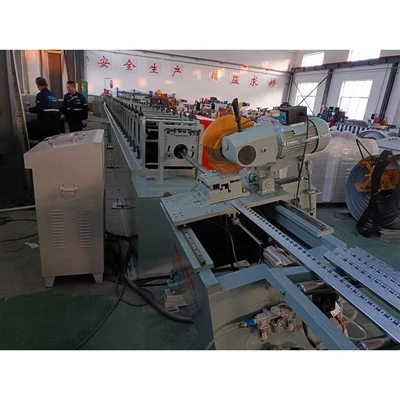
If you’re a business owner who’s invested in custom equipment and is wondering if you can expand its functions to meet your current needs, we’re here to help. We can assess your existing equipment, walk you through your upgrade options, and help you choose the solution that makes the most sense for your budget and long-term goals. Don’t let outdated equipment hold your business back—reach out to discuss your needs with our team today.
Fire Cabinet Manufacturing Line References
- U.S. Small Business Administration. (2022). “Small Manufacturing Equipment Upgrade: Cost-Benefit Analysis.”
- International Society of Automation. (2021). “Modular Design for Industrial Equipment Upgradeability.”
- FDA. (2022). “Guidance for Industry: Medical Device Cleaning Process Validation and Update.”
- Food and Agriculture Organization. (2023). “Custom Agricultural Equipment: Future-Proofing for Small Producers.”
Weifang Yue Jun Machinery Co., Ltd.
With abundant experience, we are one of the most professional customized equipment manufacturers in China. We warmly welcome you to buy durable customized equipment made in China here from our factory. We also accept customized orders.
Address: Kuiwen District, Weifang City, Shandong Province
E-mail: adrian@yuejunmachinery.com
WebSite: https://www.yuejunmachinery.com/
