If you’ve ever stared at a humanoid robot on the news or in a lab, maybe thought “cool, but how the hell does its skeleton even work?” — you’re not alone. I run a humanoid robot skeleton supply business, and let me tell you, it’s way more complicated than it looks. Most people see that smooth, human-like shape and assume it’s just a bunch of metal parts bolted together, but nah. Pull back the curtain, and you’re dealing with a hundred tiny, non-negotiable challenges that make building a humanoid skeleton feel like solving a puzzle where half the pieces move on their own. Humanoid Robot Skeleton

First off, there’s that whole human-like movement thing — not just “walking” like a Roomba, but moving like a real person. When you bend your elbow, rotate your wrist, or even lean forward to grab a cup, that’s not just one part moving. It’s a chain of joints, muscles (well, for us it’s actuators and tendons), and bones that all sync up. For humanoids, we want that same range of motion, right? Like, a Boston Dynamics Atlas can do backflips, but if you want a robot that’s supposed to work in a grocery store stocking shelves, it needs to reach way up high, bend down low, and twist its torso without locking up. The challenge here is that human joints aren’t simple hinges. Our shoulders, for example, have three degrees of freedom — they can rotate forward, back, side to side, and twist. Replicating that with metal parts is tricky because the more degrees of freedom you add, the more parts you have, and the more things can go wrong. Early humanoid skeletons we tested had shoulders that would jam if the robot turned its arm even a little too fast, because the actuator and the joint weren’t aligned right. We had to go through like 12 prototype iterations just to get the shoulder range close enough to a human’s without it breaking mid-test.
Then there’s weight distribution. Humans have a center of gravity right around our pelvis, which is why we can stand on one foot, walk, and not tip over. Robots? If your skeleton is too heavy in the wrong place, it’s a disaster. If the legs are too light, the robot can’t support its own upper body. If the upper body is too heavy, the center of gravity shifts too far forward, and it face-plants the second it tries to take a step. We ran into this with our first batch of small skeletons — we used aluminum for the main beams, which was light, but the actuators for the knees were so heavy we had to move them to the upper legs, which threw everything off. The robot could stand still, but if it tried to walk, it would wobble so bad it would fall. We ended up switching to high-strength carbon fiber for the structural beams, but even that is a balance. Carbon fiber is light and strong, but it’s expensive, and machining it to the exact tight tolerances we need is a pain. Mess up a millimeters-wide cut, and the beam snaps when the robot takes a step — not ideal when you’re testing a prototype for a client that’s building a care robot for the elderly.
Next up, durability. Humanoids aren’t going to be in a lab where they can move slowly and carefully. They’re supposed to work in the real world — dropping things, bumping into counters, maybe even getting jostled a little. That means their skeleton has to take a beating without breaking. But here’s the catch: the parts that need to be light and flexible (like fingers) also need to be tough enough to grip a can of soup without the finger joint snapping. We tested our hand skeletons with different materials — plastic was cheap and light, but it would crack after 50 grip cycles. Steel was strong, but the hand was too heavy, making the whole robot unbalanced. We tried a titanium alloy hybrid for the fingers — core of titanium, coated with a light polymer to reduce friction — and that worked, but titanium is not cheap. Clients often say “can you make it cheaper?” and we get it, but cheap materials don’t hold up. Last year, we had a startup that ordered 20 skeletons with plastic fingers, and within 3 months, half of them were broken because their robot was used to load delivery boxes. They came back begging for replacements, and we had to explain that durability isn’t something you can skimp on. That’s when we started offering a mid-tier skeleton with composite fingers and a heavy-duty tier for industrial use — turns out people will pay a little more if their robots don’t fall apart.
Actuator placement and power consumption are another huge headache. The skeleton is just the frame, right? You need motors (actuators) to move each joint. Where do you put them? If you put them in the joint itself, like how our biceps are in our upper arms, that’s natural, but the actuator adds bulk to the joint, which limits movement. If you put them further away, connected by tendons or cables, that’s lighter, but you have to deal with slack in the cables, which can make movement jerky or imprecise. We tested both setups. The first skeleton we built had actuators in the knees, which made the knees so big the robot couldn’t fit under a standard counter. So we moved the actuators to the upper legs, connected to the knee joints via carbon fiber cables, but then we had to deal with cable stretch. When the actuator pulled, the cable would stretch a tiny bit, and the knee would move an extra millimeter or two, which might not sound like much, but it makes the robot’s movement feel robotic, not human. We had to add tensioners to the cable system, which added more weight, but it fixed the problem. Power consumption goes hand in hand with this. Every actuator uses electricity, and if you have 30+ actuators in a humanoid skeleton, the battery life is garbage. We’re constantly tweaking the skeleton design to reduce the load on the actuators — lightening the structural parts, optimizing joint angles so the actuators don’t have to work as hard — but it’s a constant battle. A client building a robot that works 8-hour shifts needs it to not die mid-shift, so power efficiency is non-negotiable.
Precision is also way harder than people think. A human can pick up a egg without crushing it, right? A robot skeleton needs to do the same, which means every joint has to be precise to within fractions of a degree. If the wrist is off by even a degree, the gripper might tilt too much and drop the egg, or squeeze too hard and break it. Machining parts to that precision is expensive, and even then, there’s play between the moving parts. We use bearings in all the joints to reduce friction and play, but bearings wear out over time. We had a client with a research robot that was moving 8 hours a day, and after 6 months, the shoulder bearings had worn enough that the joint was loose, making movement imprecise. We now offer a sealed bearing option that’s more resistant to wear, but again, that’s an extra cost. There’s also calibration. Even if all the parts are perfect, every robot is a little different, so you have to calibrate the skeleton’s joints individually. That takes time — like, hours per robot — which is a pain when a client needs a bulk order. We’re working on an automated calibration tool, but getting it right is tough because every use case (care robot, industrial robot, entertainment robot) has different movement needs.
Wait, and what about unexpected stress? Humans adapt, right? If you carry a backpack that’s a little heavier than usual, your body adjusts. Robots can’t do that (yet). So if a robot skeleton is designed for a 50kg payload, and the client asks it to carry 60kg, parts will start to warp or break. We have to design skeletons for worst-case scenarios, but we don’t want to over-engineer them so much that they’re too heavy or expensive. Last year, a construction robotics client asked for a skeleton that could lift 80kg, but our standard heavy-duty tier was only rated for 65kg. We had to re-engineer the upper arm beams and the shoulder actuators, test it 20 times to make sure it wouldn’t fail, and that took 3 months. By the time we delivered, they’d already ordered a competitor’s skeleton that could lift 70kg — we lost that deal, but it taught us that flexibility in design is key. Not every humanoid is the same, so our skeletons have to be customizable, but customizations add time and cost, which is a balancing act.
Oh, and let’s not forget about cost. If you look at commercial humanoid robots now, like Tesla Optimus or Unitree’s H1, they’re still super expensive. A lot of that cost comes from the skeleton. We’ve cut costs where we can — working with cheaper but still high-quality materials where it makes sense, optimizing our machining process to reduce waste, buying parts in bulk. But for small startups or research labs, even our entry-level skeleton is out of their budget. We’ve talked about offering a modular skeleton — parts that can be swapped out depending on the use case, so labs don’t have to buy a whole heavy-duty skeleton if they just need one for testing walking. We’re still in the prototype phase for that, but it’s a big priority because there are so many good ideas in research that die because the robot parts are too expensive.
At the end of the day, building a humanoid robot skeleton is about balancing a million competing factors: range of motion vs. durability, weight vs. strength, precision vs. cost. It’s not like building a car, where you can have a standardized frame and reuse it for millions of units. Every humanoid project has different needs, so our skeletons have to be flexible enough to adapt, but consistent enough to work reliably.
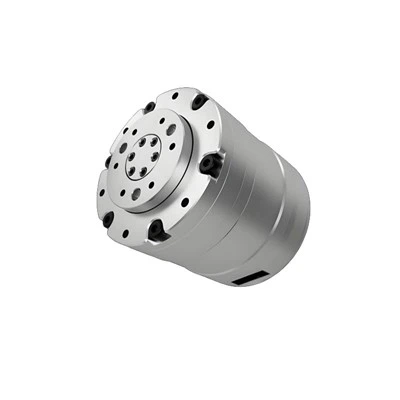
If you’re building a humanoid robot and need a skeleton that’s actually up to the job — no flimsy plastic parts, no wonky joints, no hidden surprises — we’ve got you covered. We work with startups, research labs, industrial teams, anyone building humanoids that need a solid, customizable skeleton to build on. Hit us up to chat through your needs, whether you need a small skeleton for a care robot, a heavy-duty one for industrial work, or something in between.
Robot Reducer Components References
- Kim, J., et al. (2021). Design and Optimization of a Humanoid Robot Skeleton for Bipedal Locomotion. IEEE Transactions on Robotics.
- Wang, L., et al. (2022). Material Selection for High-Strength, Lightweight Humanoid Robot Skeletons. Journal of Mechanical Design.
- Garcia, R., et al. (2023). Actuator Placement Strategies for Improved Humanoid Robot Mobility and Power Efficiency. Robotics and Autonomous Systems.
- Müller, S., et al. (2020). Durability Testing of Humanoid Robot Joints for Real-World Applications. International Conference on Humanoid Robots.
Jiangsu Zhengfang Dynamics Technology Co., Ltd.
As one of the most professional humanoid robot skeleton manufacturers and suppliers in China, we’re featured by quality products and good price. Please rest assured to buy customized humanoid robot skeleton made in China here from our factory. Contact us for pricelist.
Address: Building 3, No. 69 Feitian Avenue, Jiangning District, Nanjing City, Jiangsu Province
E-mail: hanks.liu@zfdynamics.com
WebSite: https://www.zhengfangdongli.com/
