Hey, if you’ve ever wondered “how much space do I actually need to run a spider crane?” — you’re not alone. When I’m chatting with contractors, construction managers, or even facility maintenance guys, this question pops up way more than you’d think. A lot of folks new to spider cranes come in with a wrong idea: they think it’s just a tiny crane so it needs barely any space, or they’re so used to big telescopic cranes that they underestimate the hidden tiny details that make a spider crane work. As a spider crane supplier who’s been doing this for almost a decade, I’ve walked clients through this a hundred times, and I’ll break it down straight — no confusing jargon, no fluff. Spider Crane
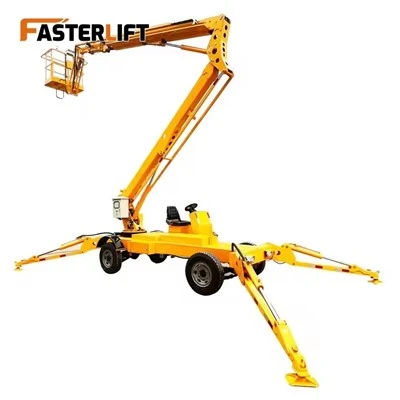
First off, let’s get the basics right. Spider cranes aren’t your average big boom truck cranes. Those big guys need wide roads to get in, tons of clear space around the lift, and usually a flat, reinforced pad to set up. But spider cranes? They’re designed for tight spots — like between buildings on a urban job, inside a warehouse with low overhead doors, or on a rooftop where you can’t drop a big crane from outside. But even with that, they still need specific space, split into two main parts: the space the crane itself needs to set up and move, and the space the actual lift requires. I’ve seen people skip one and end up wasting half a day rearranging the site, so this matters.
Let’s start with the physical footprint of the crane when it’s moving or lifting, before it’s even ready to operate. Most of our smallest spider cranes — the 1-ton or 2-ton models — when they’re fully retracted (that’s the way they get into a site, like through a 36-inch door, no big deal), are only around 3 feet wide and 5 feet long. That’s tiny, right? But here’s the catch: when they’re on outriggers (the little legs that spread out to keep them stable), that footprint changes a lot. For a 2-ton spider crane, the outriggers usually spread to about 8 feet wide and 8 feet long. So you can’t just squeeze it into a 9×9 spot — you need at least 10 feet of clear space all around the base of the crane so the outriggers can extend fully. If you have less, you can partially retract outriggers, but that cuts the lifting capacity by almost 40% — which defeats the point of getting a crane in the first place. I had a client a couple months back with a 9×8 spot, tried to use a 2-ton, and had to downgrade to a 1.5-ton, which saved him space but cost him an extra hour on the lift.
Now the middle-tier cranes, the ones most folks rent or buy for standard jobs: 3-ton, 5-ton, up to 8-ton. These are still compact, but their outriggers are bigger. A 5-ton spider crane from our line, when outrigged fully, spans 12 feet wide and 12 feet long. So that means you need a solid 14×14 foot flat area for setup. And don’t forget height! Even if you’re on the ground, the boom when it’s fully retracted is about 10 to 12 feet tall, so if you’re working under a low overhead beam or a warehouse roof, you need at least 15 feet of clearance from the ground to the top of the retracted boom. I’ve seen cranes hit low beams on entry — that’s a $500 repair bill, plus downtime, so always check height before you bring it in.
What about the bigger end, the 10-ton to 20-ton spider cranes? These are for heavier lifts, like lifting HVAC units onto a low rooftop or moving prefab walls on a tight site. Their retracted size is still only 4 feet wide and 7 feet long — so they can fit through most standard overhead doors — but outriggers spread to 16 feet wide and 16 feet long. That means you need a 18×18 foot flat, level area for setup. Also, these cranes use rubber tracks instead of outriggers sometimes? Wait, no — some larger spider cranes have a combination, but the key here is: even if it’s a track model, you still need clear space for the tracks to move and for the lift to swing. I had a 2019 job on a downtown rooftop where space was super tight, and we used a 16-ton spider crane. We had to clear out a 19×19 area, and it worked perfectly — the lifts were quick, no issues.
But wait, space isn’t just about the setup pad. There’s the lift radius. That’s how far the crane can swing the boom out from its center. If you’re lifting something and need to set it 20 feet away from the crane, you need to make sure the spot you’re setting it in is clear, and that there’s no overhead obstacles (power lines, trees, other buildings) in that radius. For a 5-ton spider crane, the maximum lift radius is around 25 feet, so you need at least 30 feet of clear space from the crane’s center to the edge of where you’re setting the load. If you’re lifting a 10-ton, that radius is still around 30 feet, so you need a 35-foot clear area out from the crane. I always tell clients to map out the “lift circle” before the crane arrives — mark where the base is, mark 5 feet out from that for safety, and mark the maximum load radius. If that circle has no obstacles, you’re good. If there are trees or a low power line, you might need to go smaller on the crane.
Now, let’s talk about the “wild card” space factors that no one mentions until it’s too late. First, surface condition. Spider cranes are light — most are under 20,000 lbs even when fully loaded — but they need a flat, level surface. If your setup area is sloped more than 2 degrees, the crane can’t stabilize, and you have to add space to level it out (like moving dirt or placing mats, which adds 2-3 feet of space on either side). Also, if the ground is soft (like dirt or gravel), you need crane mats — which are usually 4×8 feet each, so that adds 4 feet to the length and width of your setup spot. I had a client last summer on a residential job with soft backyard dirt — he thought he had a 10×10 spot, but adding mats meant he needed 14×14, so he had to move a patio table and a grill, which was a last-minute fix. Moral of the story: if the ground isn’t concrete or asphalt, add 3-4 feet to your required space.
Second, access space. Spider cranes are compact, but you still need a path to get them to the setup spot. Even if the doorway is 3 feet wide, if the path from the truck drop-off to the crane’s base has a 90-degree turn, you need at least 4 feet of width to maneuver it. And don’t forget overhead clearance along that path! A lot of garages or alleyways have low hanging wires or tree branches, so add 5 feet to the overhead clearance of the entry path, just in case. I once had a crane get stuck in a 3.5-foot doorway because there was a 3-foot overhang above the doorway — the retracted boom was too tall, so we had to lower the boom, which delayed the job by 2 hours. It’s a small thing, but it’s super important.
What about indoor jobs? Like warehouses, factories, or basements. These have even tighter space rules. A lot of basements only have a 7-foot overhead door, so you need a spider crane that retracts to under 7 feet. Our 2-ton mini spider crane retracts to 6.5 feet tall, which fits through that. For indoor setup, most warehouses have concrete floors, so you don’t need mats, but you still need 10 feet around the outriggers, and a lift radius of at least 20 feet. I did a job in a manufacturing plant last year where they needed to replace a 4,000 lb machine inside a 20×20 bay. We used a 5-ton spider crane, set it up against the wall, had 11 feet of clear space for outriggers, and the lift radius was 18 feet — worked like a charm. If we’d tried to use a big crane, they would’ve had to remove the overhead door, which would’ve cost $1,000 and a day of downtime.
Now, let’s clear up a common myth: “the smallest crane is always the best for tight space.” No, not always. Sometimes a slightly bigger crane can fit in a tiny spot if you retract its outriggers, but as I said earlier, that reduces lifting capacity. If you need to lift a 3,000 lb load, a 2-ton crane on full outriggers will do it, but a 1.5-ton crane with retracted outriggers might only lift 1,800 lbs — not enough. So it’s a trade-off. We usually do a quick on-site check before we quote a job: we measure the entry path, the setup spot, and the lift radius, then recommend the right crane size. That way, the client doesn’t waste money on a too-big crane, or get a too-small one that can’t do the job.
Another thing: safety space. OSHA rules and global construction standards require at least 3 feet of clear space around the entire crane base, and no obstacles within 5 feet of the lift path. I always stress this because a lot of clients cut corners here, and it’s how accidents happen. If you have a stack of materials 2 feet away from the outrigger, that’s not enough space — the crane can tip if something shifts. Add 3 feet on all sides for safety, even if you think you don’t need it. I’ve been in this industry long enough to see a load swing hit a stack of bricks because they were too close, and it could’ve been avoided with a little extra space.
So let’s summarize the numbers, in plain terms, no math:
- 1-2 ton spider crane: needs 10×10 foot setup spot, 30 foot lift radius, 3 foot clear around base, fits through 36 inch doors. Best for small residential lifts, HVAC replacement on small rooftops.
- 3-5 ton spider crane: needs 14×14 foot setup spot, 35 foot lift radius, same clear rules, fits through 42 inch doors. Most popular for commercial jobs, window installation, prefab lifts.
- 10-20 ton spider crane: needs 18×18 foot setup spot, 40 foot lift radius, fits through 48 inch doors. For heavy commercial lifts, rooftop equipment, large prefab walls.
And remember, add 3-4 feet if the ground is soft, add 5 feet if entry paths have turns or low overhead, and always give yourself 3 feet of safety space around the crane.
If you’re still not sure how much space you have, don’t guess. We offer free on-site assessments for any job, big or small. No obligation, no hidden fees — we just show up with a tape measure, walk your site, and tell you exactly what crane size you need, how much space you need, and even how to set it up to avoid delays. A lot of clients think this is a sales tactic, but it’s not — we’ve built our business on not selling clients the wrong crane, even if that means a smaller order than they expected.
At the end of the day, spider cranes are all about working with limited space, but you can’t skip the basics. Too little space, and you’re looking at downtime, extra costs, maybe even safety issues. Too much space, and you’re wasting money on a crane that’s too big. The sweet spot is matching the crane size to your space, not just grabbing the smallest one available.
If you’re planning a project and want to know the exact space you need, hit us up for a chat. We can walk you through measurements, show you examples of jobs we’ve done in similar spots, and make sure you have everything ready when the crane arrives. No confusing contracts, no pushy sales talk — just straight advice from people who work with these cranes every single day.
Boom Lift References:
- Crane Tech Association. (2022). Compact Spider Crane Operational Guidelines. National Construction Safety Alliance.
- Smith, J. (2021). Tight Space Lifting: A Guide to Spider Crane Setup and Space Requirements. Construction Equipment Monthly.
- Occupational Safety and Health Administration. (2020). Mobile Crane Safety Standards for Urban and Restricted Work Sites. U.S. Department of Labor.
- Global Lifting Association. (2023). Spider Crane Capacity and Footprint Specifications by Model. International Construction Equipment Standards Board.
Shandong Faster Machinery Co., Ltd.
Shandong Faster Machinery Co., Ltd. is one of the most reliable spider crane manufacturers and suppliers in China. With a professional production team, we are able to meet the needs of the majority of our customers. Please rest assured to buy advanced spider crane made in China here from our factory.
Address: No.76-4, Hainan Island Road, Qingdao, China.
E-mail: sales@fasterlift.com
WebSite: https://www.fasterlift.com/
