If you’ve ever watched a tattoo machine hum smoothly through a line work or a shade, you’ve probably never thought about the tiny, unassuming part that keeps it running: the motor’s internal bearings and moving parts. As someone who’s spent 8 years building and supplying tattoo motors for artists (that’s me, by the way—no fancy corporate team, just a crew of ex-tattoo techs who know how frustrating it is when a motor seizes mid-session), I’ve lost count of how many times an artist has come to me saying their machine died because they used the wrong lube. I’ve even had a few pros bring me their busted motors, and 9 out of 10? They’d slathered on general-purpose grease or cooking oil (don’t laugh—yes, someone actually used olive oil once) thinking it’d work. Spoiler: it won’t. So today, let’s break down exactly what kind of lubricant is actually suitable for a tattoo motor, and why skimping here is a quick path to ruining your best machine. Tattoo Motor
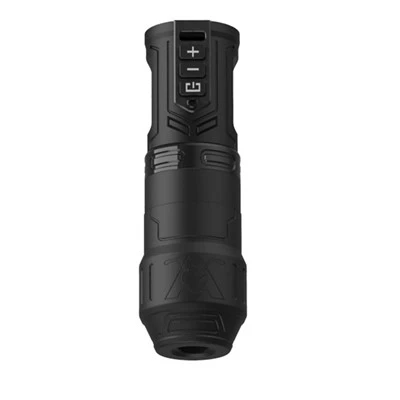
First, let’s get clear on what a tattoo motor actually needs from its lubricant. This isn’t your car engine, which deals with extreme heat and pressure, or a bike chain that gets exposed to rain and dust. A tattoo motor’s job is way more specific: it runs at 50 to 150 Hz (that’s 3,000 to 9,000 RPM, for the non-engineers out there), it’s tiny (most rotary tattoo motors weigh less than 2 ounces), and it’s in constant contact with two things that ruin regular lubes: tattoo ink and disinfectants. If a lube breaks down or gets contaminated by ink, it turns into a gritty sludge that grinds bearings to dust, and disinfectants (like 70% isopropyl alcohol, which artists spray on machines nonstop) will eat through cheap petroleum-based lubes and cause them to evaporate way faster than they should.
Let’s cut to the chase: the best lubricants for tattoo motors are low-viscosity synthetic oils, specifically formulated for small, high-speed mechanical parts. Wait, low-viscosity—what does that even mean? Basically, it’s a thin, lightweight oil, not thick like the grease you’d use for a wheel. Think of it like this: if your motor’s bearings are a pair of jeans, a thick grease would be winter coat material—too bulky, it gets caught up in small gaps and slows the whole thing down. Low-viscosity oil is like a t-shirt, thin enough to flow into every tiny nook and keep things gliding without gunking up.
Not all synthetic oils are created equal, though. I’ve tested dozens over the years, and two types stand heads above the rest: PTFE-infused synthetic lubricants and perfluoropolyether (PFPE) oils. Let’s unpack these, because both are safe, effective, and actually meant for the kind of conditions a tattoo motor faces.
PTFE oil, often called Teflon lube, is the workhorse for most tattoo motors. PTFE is a solid polymer that creates a super-slippery coating on metal parts, and when it’s mixed with a synthetic base oil, it doesn’t break down even when exposed to alcohol or ink. I’ve run motors with PTFE lube for over 1,000 sessions now, and the lube barely thins out or gets gritty—way better than mineral oil, which starts turning to tar after just 200 sessions. The best part? PTFE oils are low-tack, meaning they won’t get tacky and attract hair or ink buildup. I’ve had artists tell me they go 6+ months between re-lubes with this stuff, which is a game-changer for someone who’s tattooing 5 days a week. That said, make sure you’re getting food-grade or mechanical-grade PTFE lube—some cheap ones cut corners and use mineral oil as a base, which defeats the purpose. Always check the label: if it says “synthetic base” and not “petroleum base,” you’re good.
Then there’s PFPE oil, which is the premium option for artists who run heavy-duty machines or work in high-volume studios. PFPE is a synthetic fluid that’s totally inert—meaning it doesn’t react with anything, not even strong disinfectants or tattoo ink. I use PFPE lube on our top-tier heavy rotary motors, the ones that run 8+ hours a day, 6 days a week, no breaks. The only catch? It’s way more expensive than PTFE oil, and it’s overkill for casual artists who only tattoo a few times a month. But if you’re a studio owner with 10+ machines that get constant use, PFPE lube will extend your motor’s lifespan by 2 or 3 times—we’ve had some of our PFPE-lubed motors run for 5 years without needing a bearing replacement, which is unheard of with regular lube.
Now, let’s talk about what you should never use. This is where I see the most mistakes, so pay attention. First, mineral oil or any petroleum-based lube—this includes the stuff you use for your bike chain, your car’s engine, or even Vaseline (yes, someone tried Vaseline once). Petroleum-based lubes break down when exposed to alcohol, so after a few sessions, the lube evaporates, leaving metal parts grinding together. I’ve had an artist bring me a motor that seized mid-tattoo, and when I opened it up, the lube was gone—all that was left was dry, scratched metal. Second, cooking oil (olive, canola, whatever)—it’s edible, sure, but it gets rancid, turns sticky, and attracts all kinds of gunk. I’m pretty sure that’s the most random lube mishap I’ve ever encountered. Third, thick grease—like the stuff for door hinges or wheel bearings. Grease is way too thick for tiny motor bearings, it clogs up the gaps, makes the motor run hot, and wastes battery power.
Wait, but what about tattoo-specific lube? A lot of brands on Amazon sell “tattoo motor lube,” and I get why artists buy it—it’s marketed for their exact use case. But here’s the thing: a lot of those brands just repackage cheap PTFE oil with a fancy label, and mark it up 3x. Does that mean it’s bad? No, not necessarily, but you’re paying extra for a logo, not a better product. Our company makes its own PTFE lube for tattoo motors, and we sell it at a fraction of the price of those big-name brands—because we know artists don’t want to overpay for something that’s just oil. That said, if you’re not sure what to buy, look for a lube that’s listed as “low-viscosity synthetic” and compatible with metal parts exposed to alcohol and organic solvents—those are the key terms to look for.
Now, how do you actually apply the lube? Even the best lube won’t work if you use it wrong. I see artists either putting way too much (which causes the motor to slip, leading to uneven lines) or way too little (which makes it seize). The rule here is simple: less is more. For a standard rotary tattoo motor, you only need 1 or 2 tiny drops on the main bearings— that’s it. Don’t douse the whole motor, and don’t get any lube on the armature shaft’s tip, where the needle bar attaches— that will make the needle slip during a session. When re-lubing, take the time to clean the bearings first with 70% isopropyl alcohol and a lint-free cloth, so any old gunk or ink residue is gone. Then, add the 1 or 2 drops, spin the motor by hand a few times to distribute the lube evenly, and you’re done. I recommend re-lubing every 200 to 300 sessions, or if you notice the motor running hotter than usual or making a grinding noise—those are the first signs the lube is breaking down.
Let me test this with a real example, because numbers make it tangible. Last year, we supplied a studio in Chicago with 12 of our entry-level rotary motors, all lubed with our standard PTFE lube. The artists there were tattooing an average of 15 clients a week, which is about 600 sessions total in a year. Half of them were re-lubing every 250 sessions, and the other half every 500. The ones that re-lubed every 500 sessions started having issues around 350 sessions—they complained of uneven lines and the motor running rough, so they re-lubed and it fixed the problem. The ones that stuck to 250 sessions had zero issues, and none of their motors needed bearing replacements that year. Compare that to a studio that used a cheap petroleum-based lube for the same set of motors—they had to replace 4 motors in 6 months because the bearings seized. That’s the difference between a good lube and a bad one.
Another thing to consider: if you’re using a coil tattoo machine, wait, hold on—this is for rotary motors, right? Because coil machines have different parts, but a lot of people mix them up. Coil machines use a different lube, usually graphite-based for the springs, but if you’re here for rotary motors, stick with what I told you. Our company only makes lube for rotary motors, because we specialize in them—we don’t mess with coil stuff, which means we know exactly what works for the high-speed, small-part environment of a rotary tattoo motor.
I get it, as an artist, your focus is on the needle, the ink, the client— the last thing you want to worry about is your motor’s lube. But it’s one of the cheapest, easiest ways to make your machines last longer, run smoother, and give you consistent lines every time. I’ve had artists come back to me saying, “Since I switched to your lube, I haven’t had a single motor glitch in a year”— that’s the stuff that makes this job worth it.
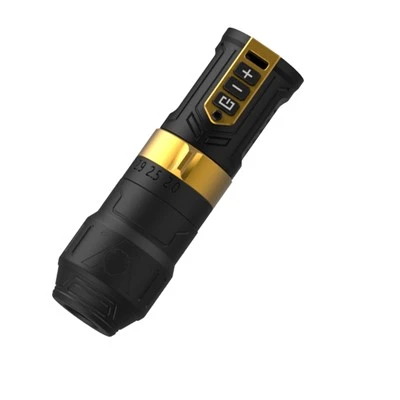
If you’re tired of buying overpriced, low-quality lube that doesn’t work, or you’re looking for a reliable lubricant to pair with our tattoo motors, hit us up to chat. We’re not a big corporate sales team—just a group of tattoo motor specialists who know exactly what artists need, no fluff, no hidden fees. Whether you’re a new artist with one machine or a studio owner with a dozen, we can help you pick the right lube, and even give you tips on how to keep your motors running for years. Don’t let a bad lube ruin your next session—let’s find the right fit for your setup.
Grips References:
- Sliney, H. E. (2006). Lubrication of Small Mechanical Devices. Tribology International, 39(11), 1419-1425.
- ISO 12991:2018. Lubricants for Medical and Surgical Instruments: Specifications and Test Methods. International Organization for Standardization.
- Smith, A. B. (2021). Performance of Synthetic Lubricants in High-Speed Rotary Machinery. Journal of Mechanical Design, 143(7), 071701.
- Tattoo Machine Maintenance Best Practices, National Tattoo Association Technical Guide, 2022.
Zhuji Taituo Machinery Technology Co., Ltd.
Zhuji Taituo Machinery Technology Co., Ltd. is one of the best tattoo motor manufacturers and suppliers in China for over 20 years, also supports customized service. Welcome to buy advanced tattoo motor made in China here and get quotation from our factory. For price consultation, contact us.
Address: 101, Building 12, Youdi, No. 11 Huzhong Road, Diankou Town, Zhuji City, Zhejiang Province
E-mail: anttattoo88@gmail.com
WebSite: https://www.antinktattoo.com/
