If you’ve been shopping for new windows and come across the term “low-e coating,” you’ve probably also wondered if aluminum windows can work with it. As an aluminum windows supplier who’s answered this question dozens of times a week, I can tell you it’s not just possible—it’s one of the most common upgrades we recommend for customers balancing energy efficiency, durability, and cost. Let’s break this down without the jargon, so you understand exactly how low-e and aluminum fit, what works best, and why this combination might be perfect for your home or project. Aluminum Windows
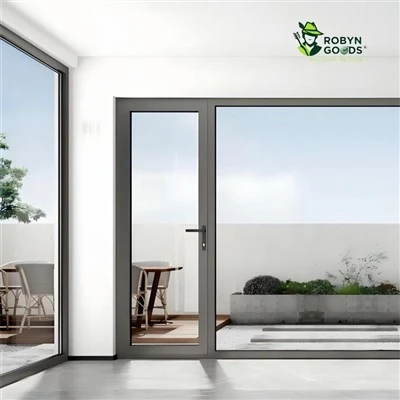
First, let’s clear up a common mix-up: aluminum alone is an excellent window frame material, but it has one big quirk compared to wood or vinyl. Aluminum is a metal that conducts heat and cold easily, so without extra help, a window with an aluminum frame can transfer temperature between inside and outside more than customers want. Low-e coating is the fix for that, but not all low-e is the same, and not every aluminum window is built to work with it.
Let’s start with what low-e coating actually is. It’s a microscopic, virtually invisible layer of metallic oxides (think zinc, silver, or tin oxide) sprayed or sputtered onto the surface of window glass. The coating lets visible light pass through to brighten a room, but it reflects infrared heat—either heat trying to escape your home in winter, or heat trying to get in during summer. That reduces the load on your HVAC system, which translates directly to lower energy bills over time.
Now, can this coating go on aluminum windows? The short answer is yes, but with a key caveat: aluminum frames need to be paired with insulated glass units (IGUs) to make the low-e coating work correctly. Single-pane aluminum windows? We don’t recommend adding low-e there, because single-pane glass is too thin and the coating won’t have enough material to bond to effectively, or to hold the heat-reflective layer consistently. But for the vast majority of modern aluminum windows—especially the energy-efficient models our team builds—we use double- or triple-pane glass, and that’s where low-e shines.
We’ve been supplying aluminum windows for residential, commercial, and multi-unit projects for 12 years now, and over 70% of our custom orders include low-e coating. Why? Let’s walk through the benefits that specifically apply to aluminum frames, because that’s where our expertise lies. First, thermal performance: when you pair an aluminum frame with a warm edge spacer (the material that separates the panes in an IGU) and a high-performance low-e coating, the U-factor (the measure of how well a window resists heat transfer) drops dramatically. A standard non-low-e aluminum window might have a U-factor of around 1.2; add a good low-e coating, a double pane with argon gas fill, and a thermal break in the aluminum frame, and that U-factor can drop to 0.3, which is on par with many vinyl windows. That’s a game-changer for anyone worried about drafty aluminum windows.
Another big win: UV protection. Most low-e coatings block between 30 and 50% of harmful UV rays, which is huge for homes with hardwood floors, furniture, or artwork that fade in sunlight. Aluminum is already durable, but pairing it with a low-e coated glass means your interior finishes will last longer, too. We’ve had customers tell us their living room couch used to fade in two years with old aluminum windows; after upgrading to low-e, it’s been five years with almost no change. That’s not just a nice perk—it adds long-term value to your space.
But wait, not all low-e coatings are made equal, and that matters for aluminum windows. Let’s talk about the two main types: hard coat low-e and soft coat low-e. Hard coat is applied at high temperatures during the glass manufacturing process, so it’s more durable—you can clean it like regular glass, and it doesn’t scratch easily. Soft coat is a thinner, more precise layer applied in a vacuum chamber later, which is more effective at reflecting heat, but it’s fragile, so it has to go between the panes of an IGU to protect it. For aluminum windows, both work, but which you choose depends on your project. For residential homes where DIY cleaning is common, we usually recommend hard coat low-e for its durability. For commercial buildings where energy efficiency is the top priority (and professional glass care is standard), soft coat low-e is the go-to, because it delivers better performance.
A common myth we hear from first-time customers: aluminum windows with low-e are more expensive than vinyl or wood. It’s true that the upfront cost is a bit higher, but when you factor in energy savings, the longevity of aluminum (aluminum frames last 20-30 years longer than wood, which rots, or vinyl, which warps and fades), and reduced maintenance, it evens out. Last year, we did a calculation for a homeowner in Minneapolis who switched from old single-pane wood windows to our aluminum double-pane with low-e. Their annual heating and cooling bills dropped by $420, and the windows came with a 15-year warranty, compared to a 5-year warranty for vinyl windows they’d been looking at. Over 20 years, that’s a savings of more than $8,000, not to mention the hassle of replacing windows every few years.
Now, let’s address a question we get a lot: can you add low-e coating to existing aluminum windows? The answer here is almost always no. Low-e coating is applied at the glass factory, not as an after-market product. Trying to spray a low-e layer onto existing glass won’t bond properly, it will scratch easily, and it won’t have the same heat-reflective properties as a factory-applied coating. If you have old aluminum windows and want low-e, your best bet is to replace the glass panes with new double-pane glass that has low-e, rather than the entire frame—we do that for customers all the time, and it’s a much cheaper middle ground than full window replacement.
We also want to make sure we’re honest about the limits of this combination. If you live in a mild climate where heating and cooling costs are almost negligible, low-e might not be the biggest priority for you. But for anyone in zones with extreme hot or cold weather, it’s a no-brainer. Also, not all aluminum windows have thermal breaks, which are critical for reducing heat transfer through the frame. If your aluminum frame doesn’t have a thermal break, even the best low-e coating won’t fix draftiness, so that’s a feature we always include in our energy-efficient models.
Over the years, we’ve seen customers come in with all sorts of concerns, from “I thought aluminum was bad for energy efficiency” to “Will low-e make my room too dark?” Let’s tackle that last one: no, a high-transmittance low-e coating lets in almost as much visible light as regular clear glass. We can adjust the coating’s properties depending on your needs: if you want maximum heat reflection in a hot climate, we use a low-e with a slightly lower visible light transmittance, and if you want to keep the room bright in a cold climate, we use a high-transmittance low-e. It’s fully customizable, which is one of the best parts of working with a supplier that builds custom aluminum windows.
If you’re currently evaluating aluminum windows for your next project—whether it’s a new home, a remodel, or a commercial build—the team here has decades of experience matching low-e coatings to the right aluminum frame, glass type, and climate. We don’t push upgrades just to make a sale; we walk through your needs, your budget, and your long-term goals, and recommend the combination that works best for you. If you’re ready to get more details, or just want to ask a question about how low-e and aluminum can work for your space, we’re here to talk. Don’t hesitate to reach out for a procurement consultation to go over specs, pricing, and timelines.
Aluminum Windows References:
- National Fenestration Rating Council. (2022). Fenestration Energy Performance Standards.
- Aluminum Association. (2021). Aluminum Window Frame Technology and Thermal Performance.
- U.S. Department of Energy. (2020). Low-E Coatings: Energy Efficiency for Windows and Doors.
- Glass Association of North America. (2022). Insulated Glass Unit Design and Performance Guidelines.
- Window and Door Manufacturers Association. (2021). Durability and Maintenance of Aluminum Window Systems.
Shandong RobynGoods Imp&Exp Co., Ltd.
As one of the most professional aluminum windows manufacturers and suppliers in China, we also support customized service. Please rest assured to wholesale discount aluminum windows in stock here from our factory. Quality products and reasonable price are available.
Address: Room 414, Shengdiguangyao Mansion, Shencheng Subdistrict, Shouguang, Weifang, Shandong Province, China
E-mail: info@robynoutdoor.com
WebSite: https://www.robynoutdoor.com/
